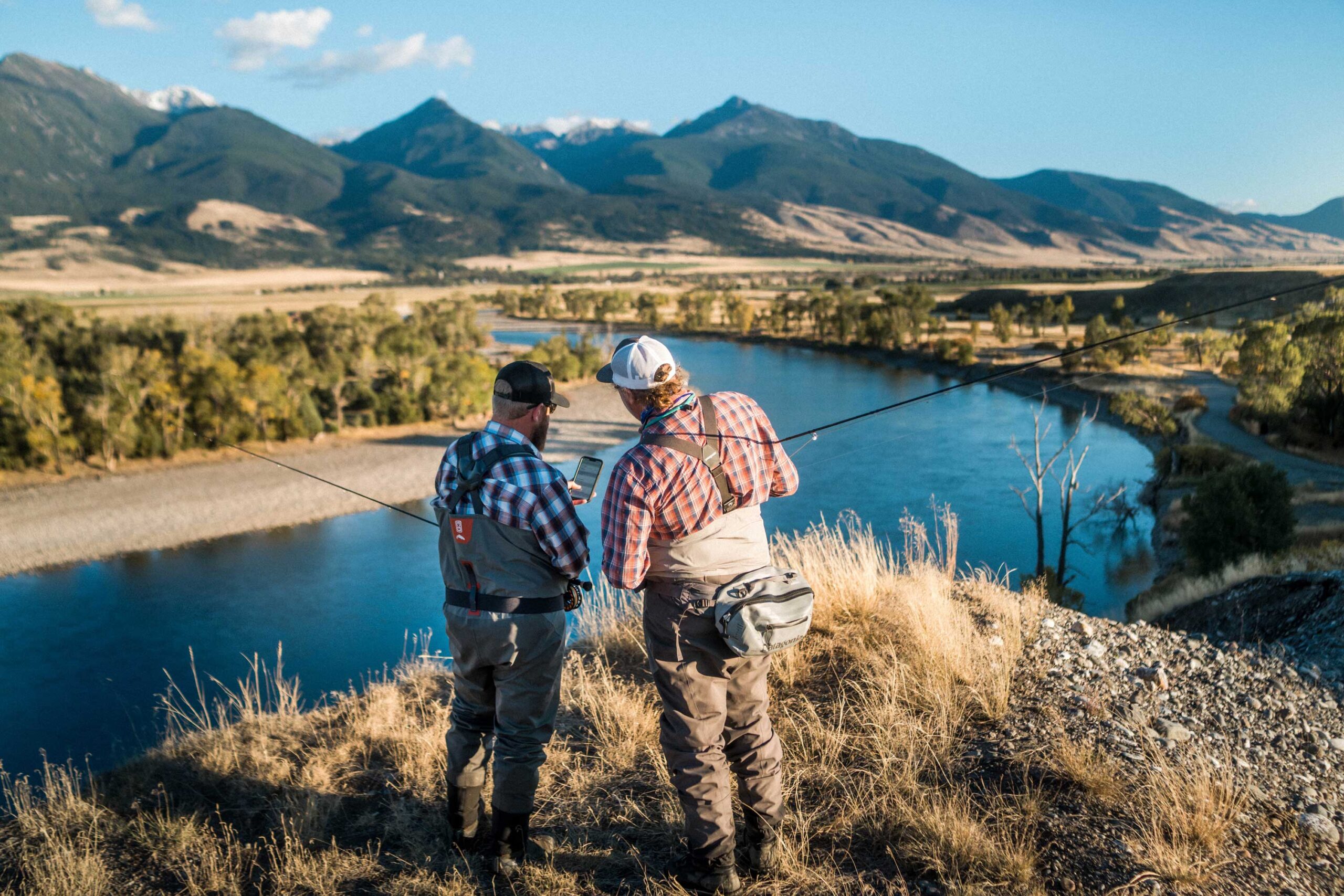
OnWater launched in 2022 and has grown to 400,000 users across its two apps. (Courtesy onWater)
Scott Carver and Alex Maier feel like they’ve reeled in a trophy.
Their outdoor tech startup OnWater has grown 300% each year in revenue and user count since its launch in 2022. Its apps help hook all the information needed before, during and after time on the water.
“Our vision is to really own and be a dominant player in the water recreation and conservation category,” said Carver, the company CEO. He and onWater co-founder Tim Harrington live in Louisville while Maier, onWater’s president, lives in Washington.
“And we are quickly establishing ourselves as just that,” Carver continued.

Scott Carver (Courtesy onWater)
OnWater just raised $2 million for its fishing software of the same name and its paddling app, Paddleways. The round was led by San Francisco-based Scrum Ventures and brings onWater’s funding to $7 million. The previous $5 million was from Carver’s venture firm Carver Ventures.
Maier told BusinessDen that onWater’s apps have a combined 400,000 users. Users get information on what waters are accessible, 3D mapping showing entry points, weather outlooks, waypoint setting and a slew of other features.
Both he and Carver said they want their software to be to the angler and paddling communities what the popular app AllTrails is to hikers.
“We are clearly the first mover in the paddle space. There are other fishing apps, so we have some competition, but still no one has any significant market share,” Carver said. “Where we’ve been able to sprint past competitors … is what we’re doing in the conservation area.”
The main way is through an artificial intelligence software onWater recently rolled out dubbed “angler intelligence.”
The AI has patented fish identification technology, Carver said. Someone can snap a picture of a trout, and the app will spit out the exact species and its length. The AI also can tell if it was the same exact fish you caught last year.
Carver said the tool has the potential to revolutionize fisheries management, which now relies on taking fish out of the water and tagging them.

Alex Maier (Courtesy onWater)
OnWater also has deals with various organizations like Trout Unlimited that will allow the company to monitor migration patterns and the health of populations and streams much more efficiently, Carver said.
“Colorado Parks and Wildlife has a very limited science base out in the field,” Carver said, using another example. “We want to exponentially expand the dataset they have access to by just engaging everyday anglers and contributing information.”
Most of onWater’s users are on the free plan, which gives access to waypoints, weather, access points and a fishing journal. But 7% of them pay $50 a year for access to the plus version, which allows 3D and offline mapping, the ability to see private property and access to the AI.
Next year, onWater will roll out an additional tier. The $80 pro version will include more “nitty gritty, nerdy” advanced data, Maier said. It will also come with educational opportunities, event offerings and product discounts.
Maier and Carver expect the user base to hit one million next year. About 70% of the users are with onWater while the remaining 30% are on the paddling app. One day, they will likely be under one umbrella. But for now, the apps and subscriptions are separate costs.
“We’re probably one of the fastest growing apps in the country,” Carver said. “We fully intend to have a global presence and will expand into Canada in 2026, but right now we’re focused on the U.S.”
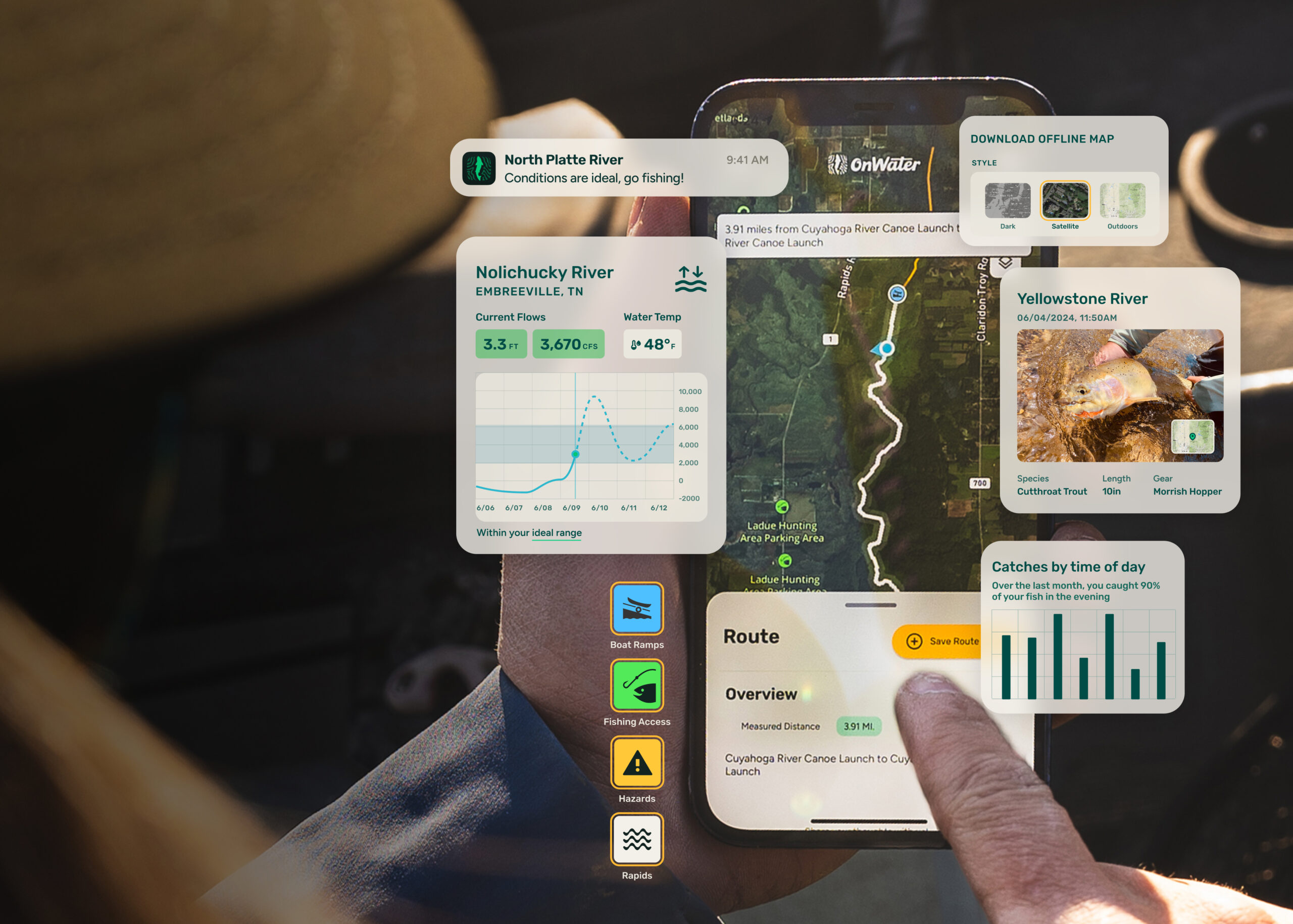
OnWater subscribers get information on what waters are accessible, 3D mapping showing entry points, weather outlooks, waypoint setting and a slew of other features. (Courtesy onWater)
The bulk of onWater’s revenue comes from subscription fees, Maier said. Carver said onWater will do $1 million in revenue this year and projects that number to be $2.5 million in 2026.
Carver plans to add advertising to free accounts next year, with outdoor clothing retailer Patagonia as the first client. He said the company also brings in cash through licensing agreements.
For example, Northwest River Supplies, or NRS, one of the leading brands in the paddlesports world, has paid to attach its name to the Paddleways app for increased exposure. Carver said that’s probably 20% of onWater’s revenue right now, but he expects that number to sit at 30% in upcoming years.
OnWater has 16 employees. Most are split between Colorado, Utah and Montana, Carver and Maier said.
Carver, an avid outdoorsman, came up with the idea for the apps while planning a trip with some friends.
They were sitting around discussing where to go, how to access the water, the conditions – all the things one should know before going out with bait and tackle.
“And we said, ‘Jeez, there’s got to be an app for that,’” he recalled. “But there really wasn’t.”
OnWater launched in 2022 and has grown to 400,000 users across its two apps. (Courtesy onWater)
Scott Carver and Alex Maier feel like they’ve reeled in a trophy.
Their outdoor tech startup OnWater has grown 300% each year in revenue and user count since its launch in 2022. Its apps help hook all the information needed before, during and after time on the water.
“Our vision is to really own and be a dominant player in the water recreation and conservation category,” said Carver, the company CEO. He and onWater co-founder Tim Harrington live in Louisville while Maier, onWater’s president, lives in Washington.
“And we are quickly establishing ourselves as just that,” Carver continued.
Scott Carver (Courtesy onWater)
OnWater just raised $2 million for its fishing software of the same name and its paddling app, Paddleways. The round was led by San Francisco-based Scrum Ventures and brings onWater’s funding to $7 million. The previous $5 million was from Carver’s venture firm Carver Ventures.
Maier told BusinessDen that onWater’s apps have a combined 400,000 users. Users get information on what waters are accessible, 3D mapping showing entry points, weather outlooks, waypoint setting and a slew of other features.
Both he and Carver said they want their software to be to the angler and paddling communities what the popular app AllTrails is to hikers.
“We are clearly the first mover in the paddle space. There are other fishing apps, so we have some competition, but still no one has any significant market share,” Carver said. “Where we’ve been able to sprint past competitors … is what we’re doing in the conservation area.”
The main way is through an artificial intelligence software onWater recently rolled out dubbed “angler intelligence.”
The AI has patented fish identification technology, Carver said. Someone can snap a picture of a trout, and the app will spit out the exact species and its length. The AI also can tell if it was the same exact fish you caught last year.
Carver said the tool has the potential to revolutionize fisheries management, which now relies on taking fish out of the water and tagging them.
Alex Maier (Courtesy onWater)
OnWater also has deals with various organizations like Trout Unlimited that will allow the company to monitor migration patterns and the health of populations and streams much more efficiently, Carver said.
“Colorado Parks and Wildlife has a very limited science base out in the field,” Carver said, using another example. “We want to exponentially expand the dataset they have access to by just engaging everyday anglers and contributing information.”
Most of onWater’s users are on the free plan, which gives access to waypoints, weather, access points and a fishing journal. But 7% of them pay $50 a year for access to the plus version, which allows 3D and offline mapping, the ability to see private property and access to the AI.
Next year, onWater will roll out an additional tier. The $80 pro version will include more “nitty gritty, nerdy” advanced data, Maier said. It will also come with educational opportunities, event offerings and product discounts.
Maier and Carver expect the user base to hit one million next year. About 70% of the users are with onWater while the remaining 30% are on the paddling app. One day, they will likely be under one umbrella. But for now, the apps and subscriptions are separate costs.
“We’re probably one of the fastest growing apps in the country,” Carver said. “We fully intend to have a global presence and will expand into Canada in 2026, but right now we’re focused on the U.S.”
OnWater subscribers get information on what waters are accessible, 3D mapping showing entry points, weather outlooks, waypoint setting and a slew of other features. (Courtesy onWater)
The bulk of onWater’s revenue comes from subscription fees, Maier said. Carver said onWater will do $1 million in revenue this year and projects that number to be $2.5 million in 2026.
Carver plans to add advertising to free accounts next year, with outdoor clothing retailer Patagonia as the first client. He said the company also brings in cash through licensing agreements.
For example, Northwest River Supplies, or NRS, one of the leading brands in the paddlesports world, has paid to attach its name to the Paddleways app for increased exposure. Carver said that’s probably 20% of onWater’s revenue right now, but he expects that number to sit at 30% in upcoming years.
OnWater has 16 employees. Most are split between Colorado, Utah and Montana, Carver and Maier said.
Carver, an avid outdoorsman, came up with the idea for the apps while planning a trip with some friends.
They were sitting around discussing where to go, how to access the water, the conditions – all the things one should know before going out with bait and tackle.
“And we said, ‘Jeez, there’s got to be an app for that,’” he recalled. “But there really wasn’t.”