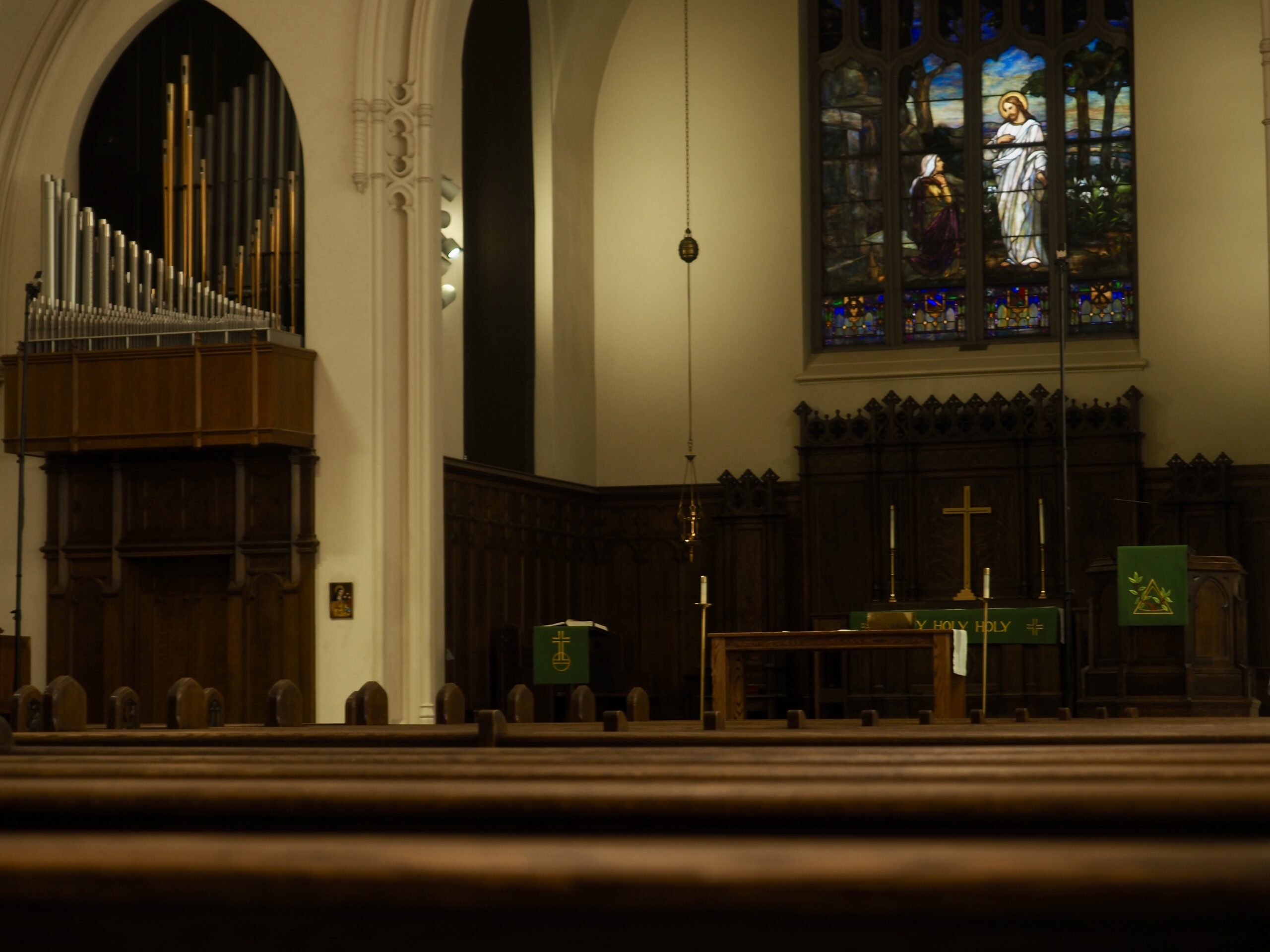
Inside the sanctuary at 1600 Grant St. (Matt Geiger/BusinessDen)
Pastor Barbara Berry-Bailey is used to opening her church’s doors to the public. Soon, she may have to close them for the first time in a hundred years.
“I know we’re going to do Christmas from here, but that is up to the congregation as to the timeline, when they want to move and what they want to do,” she said.
Berry-Bailey is the pastor of St. Paul’s Lutheran Church at 1600 Grant St. in Uptown, which was listed for sale last month for $1.9 million. The cornerstone for the Gothic church was laid in 1925 when the congregation was moving from its original home at 22nd and California streets, according to its entry into the National Register of Historic Places.
In Berry-Bailey’s seven years of ministry there, Sunday attendance has dwindled from 60 to around 20. She showed a BusinessDen reporter a photo from the day she was installed as pastor in 2018, and noted the numerous congregants that have died or moved away.
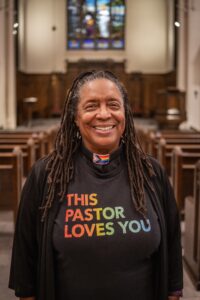
Pastor Barbara Berry-Bailey (Provided photo)
The building needs $1 million in maintenance work and $200,000 to repair the original pipe organ, which will transfer to a buyer in a sale, Berry-Bailey said. The musician who played it retired in mid-September, and the choir hasn’t returned since the pandemic.
“The demographics of the neighborhood have changed over the course of 100 years. … And if you look at church attendance in mainline Christian denominations, it’s on the decline,” the pastor said.
“People who need to hear the gospel don’t see it as good news. Our signal is getting jammed.”
So, the 141-year-old congregation voted to put the 13,512-square-foot building up for sale as a result. Members will decide later whether to continue elsewhere or fold entirely. If they choose the former, the sales proceeds will finance a move; if the latter route is selected, those monies will go to the broader Rocky Mountain Synod, the regional arm of the Evangelical Lutheran Church in America.
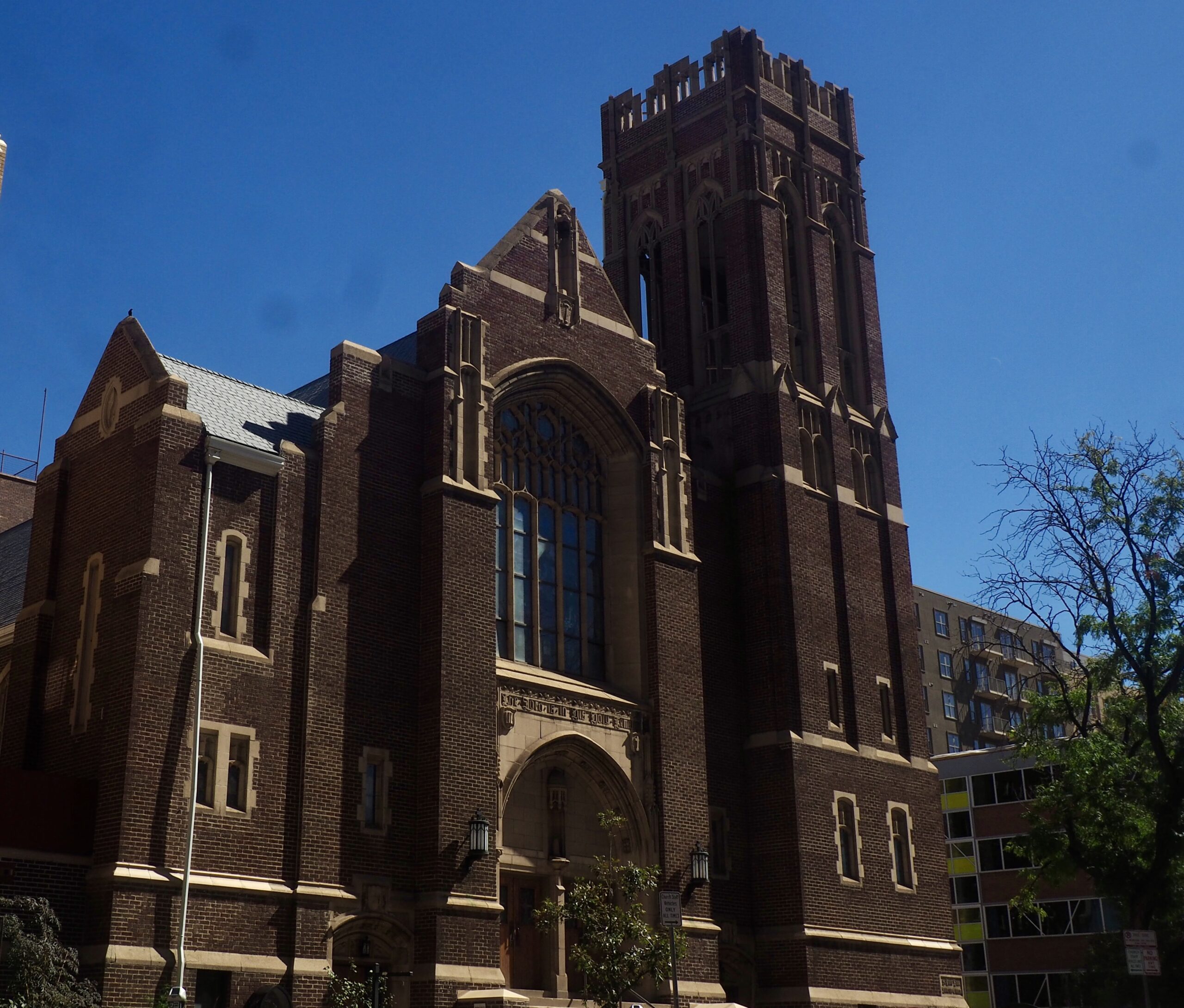
The exterior of St. Paul’s Lutheran Church. (Matt Geiger/BusinessDen)
At the church’s core is the 350-seat sanctuary, adorned with stained glass windows and a vaulted ceiling. Standing at its entrance, Berry-Bailey began to clap to show off the room’s sound quality.
“The acoustics in the building, it is sought out,” she said.
To that note, the broker listing the building, Tom Mathews of Pinnacle Real Estate Advisors, said music venues have eyed the property for purchase.
“I’ve got an entertainment group that’s looking at it,” he said. “I’ve got a couple of ministry groups, Christian ministry, or faith-based ministry groups, that are looking at it. And then I even have a group that might want to buy it and convert it to a residential property.”
The church’s lower level has meeting rooms and a commercial kitchen once used to cook spaghetti dinners for hundreds of homeless people through St. Paul’s Street Reach program. In the church’s heyday in the 1950s, some 300 churchgoers would come to services, Berry-Bailey said.
But all of that is in the past. And while Berry-Bailey can point to all sorts of reasons for the church’s decline — people becoming less religious, the neighborhood’s high cost of housing and the lack of young folks in the congregation’s ranks — she plans to stay strong at the pulpit until the church’s last service.
“As any true pastor would tell you, the church is not the building. The church is the people,” she said.
Inside the sanctuary at 1600 Grant St. (Matt Geiger/BusinessDen)
Pastor Barbara Berry-Bailey is used to opening her church’s doors to the public. Soon, she may have to close them for the first time in a hundred years.
“I know we’re going to do Christmas from here, but that is up to the congregation as to the timeline, when they want to move and what they want to do,” she said.
Berry-Bailey is the pastor of St. Paul’s Lutheran Church at 1600 Grant St. in Uptown, which was listed for sale last month for $1.9 million. The cornerstone for the Gothic church was laid in 1925 when the congregation was moving from its original home at 22nd and California streets, according to its entry into the National Register of Historic Places.
In Berry-Bailey’s seven years of ministry there, Sunday attendance has dwindled from 60 to around 20. She showed a BusinessDen reporter a photo from the day she was installed as pastor in 2018, and noted the numerous congregants that have died or moved away.
Pastor Barbara Berry-Bailey (Provided photo)
The building needs $1 million in maintenance work and $200,000 to repair the original pipe organ, which will transfer to a buyer in a sale, Berry-Bailey said. The musician who played it retired in mid-September, and the choir hasn’t returned since the pandemic.
“The demographics of the neighborhood have changed over the course of 100 years. … And if you look at church attendance in mainline Christian denominations, it’s on the decline,” the pastor said.
“People who need to hear the gospel don’t see it as good news. Our signal is getting jammed.”
So, the 141-year-old congregation voted to put the 13,512-square-foot building up for sale as a result. Members will decide later whether to continue elsewhere or fold entirely. If they choose the former, the sales proceeds will finance a move; if the latter route is selected, those monies will go to the broader Rocky Mountain Synod, the regional arm of the Evangelical Lutheran Church in America.
The exterior of St. Paul’s Lutheran Church. (Matt Geiger/BusinessDen)
At the church’s core is the 350-seat sanctuary, adorned with stained glass windows and a vaulted ceiling. Standing at its entrance, Berry-Bailey began to clap to show off the room’s sound quality.
“The acoustics in the building, it is sought out,” she said.
To that note, the broker listing the building, Tom Mathews of Pinnacle Real Estate Advisors, said music venues have eyed the property for purchase.
“I’ve got an entertainment group that’s looking at it,” he said. “I’ve got a couple of ministry groups, Christian ministry, or faith-based ministry groups, that are looking at it. And then I even have a group that might want to buy it and convert it to a residential property.”
The church’s lower level has meeting rooms and a commercial kitchen once used to cook spaghetti dinners for hundreds of homeless people through St. Paul’s Street Reach program. In the church’s heyday in the 1950s, some 300 churchgoers would come to services, Berry-Bailey said.
But all of that is in the past. And while Berry-Bailey can point to all sorts of reasons for the church’s decline — people becoming less religious, the neighborhood’s high cost of housing and the lack of young folks in the congregation’s ranks — she plans to stay strong at the pulpit until the church’s last service.
“As any true pastor would tell you, the church is not the building. The church is the people,” she said.