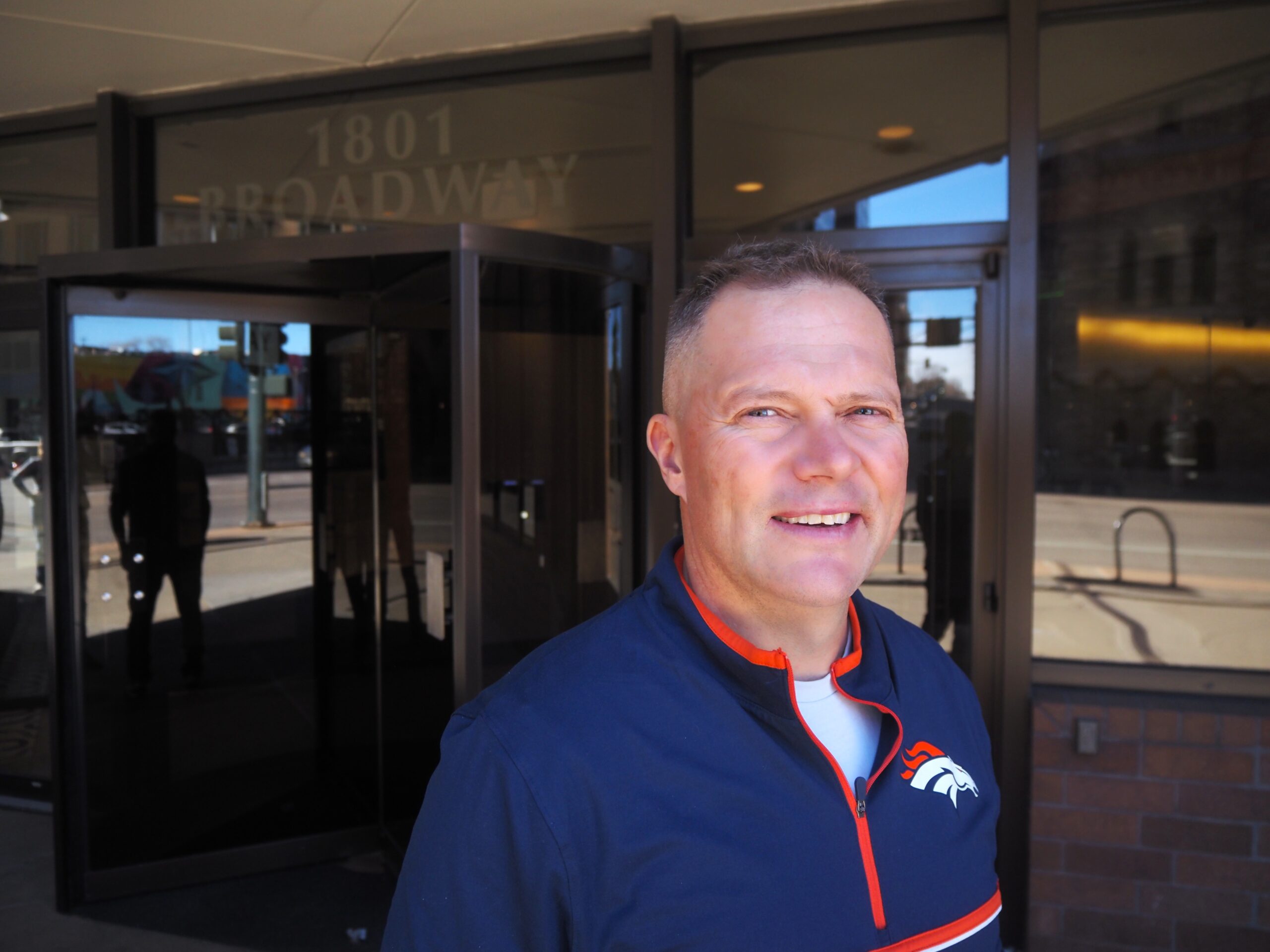
Craig Clark, 48, stands in front of the Trinity Place office tower at 1801 Broadway in Denver on Jan. 5, 2026. (Thomas Gounley/BusinessDen)
Craig Clark believes the feel of downtown Denver is on an upswing.
“I think we passed the bottom for vibrancy in downtown,” he said.
And the Cherry Hills Village resident now owns a major asset on the upper end of it. On Dec. 30, a group of investors led by Clark paid $6 million for the distressed 17-story Trinity Place office tower at 1801 Broadway, records show.
That’s about $31 a square foot for the 195,000-square-foot structure. It’s an 85% drop from 2019, when a Chicago-based coworking firm Expansive bought the building for $40.2 million.
Clark bought the tower from LoanCore Capital, a lender that financed the 2019 acquisition and foreclosed on the property in November 2024. LoanCore tasked JLL with finding a buyer last year.
Clark’s bid was not initially selected.
“We ended up second place to a residential conversion,” he told BusinessDen Monday.
Given its smaller floorplates, about 12,000 square feet, Trinity Place had been considered a possible fit to be turned into apartments. But the original buyer planning to do that — a Seattle-based firm, sources tell BusinessDen — didn’t make it to the finish line on the purchase.
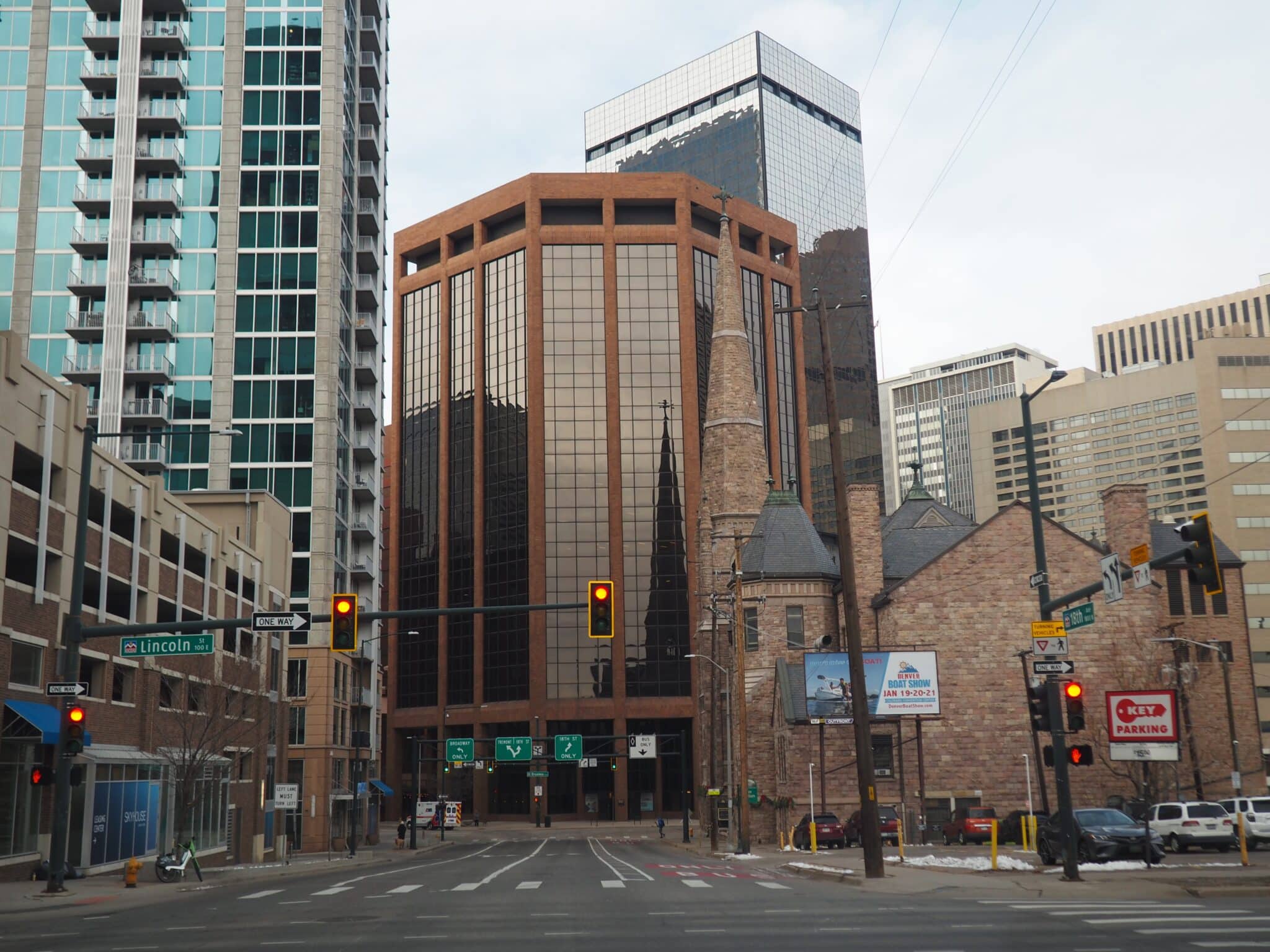
The Trinity Place building at 1801 Broadway is 17 stories. (BusinessDen file)
In September, Clark said he stepped back in. He financed the deal with a $4.5 million loan from Dynamo Capital.
On his tour of the building while it was listed, Clark said, he concluded that a residential conversion wasn’t feasible. In the event of medical emergencies, the freight elevator can’t fit a laid-down gurney, he said. While there are two sets of stairs, they share the same shaft. Each of those problems could require a new shaft, he said — potentially a $20 million cost.
So, Clark is keeping Trinity Place as an office building.
“We see it as a lease-up,” he said.
The building is 30% occupied, according to Clark. He said he thinks the lender made a mistake by assuming a residential conversion would be the best use and ceasing leasing efforts as a result.
Office buildings have been selling at deep discounts across the metro area for the past couple years. Downtown, the Denver Energy Center and 621 and 633 17th St. have sold for even less than Clark paid.
But he sees Trinity Place as a safer bet because the building isn’t in need of a huge amount of work.
“The condition is so good and it’s already modernized,” he said, noting that Expansive did a lot of work.
Clark said he started 2025 owning about 500,000 square feet of commercial real estate along the Front Range. He ended the year just shy of 1 million. Trinity Place is his largest asset, eclipsing the 110,000-square-foot office building at 327 Inverness Drive South in Douglas County that he bought in 2024.
But the 48-year-old isn’t your average real estate guy.
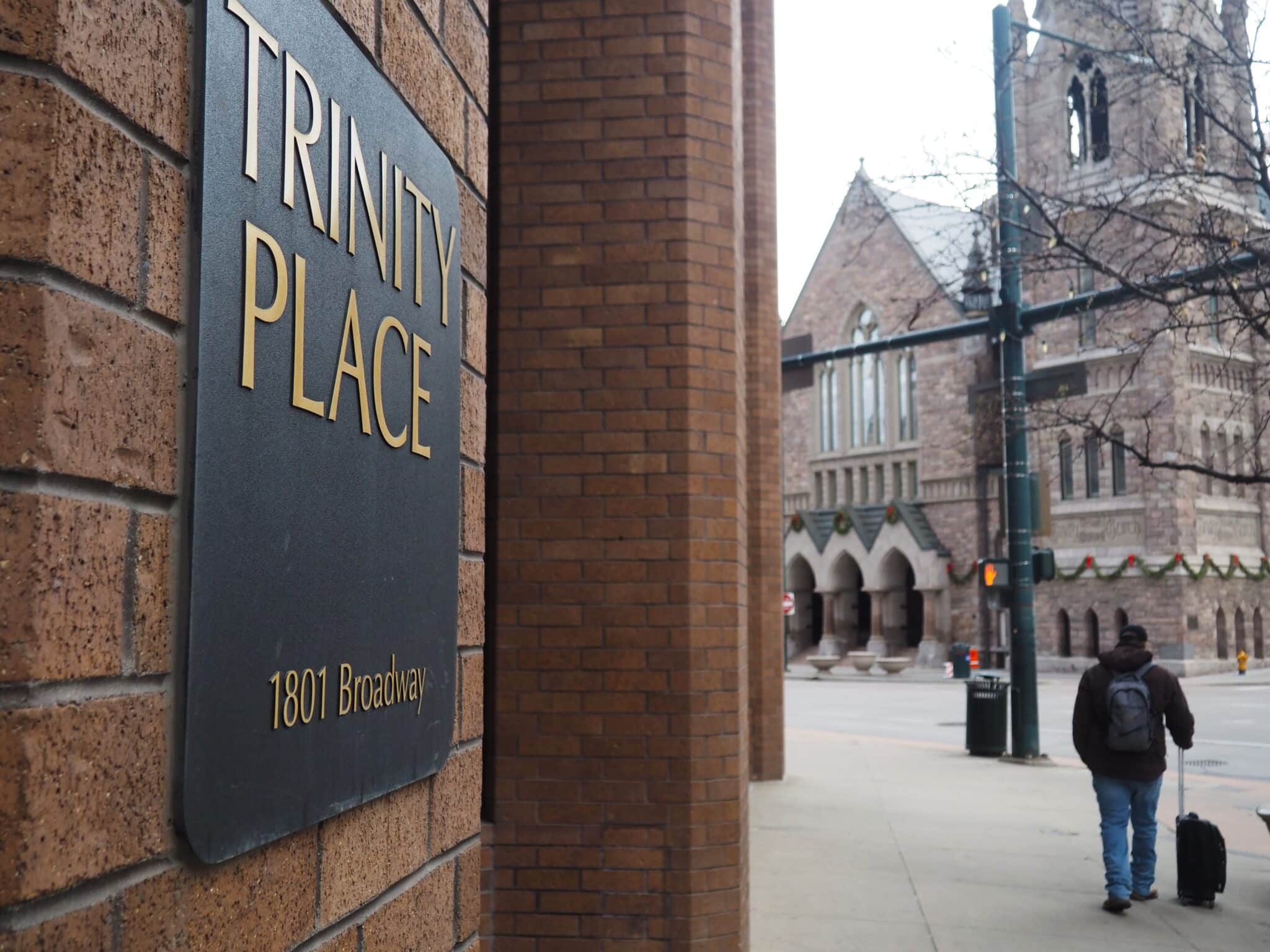
Signage for Trinity Place. (BusinessDen file)
A Colorado native and graduate of the University of Colorado School of Law, Clark served as a judge advocate general, or JAG, officer in the U.S. Marine Corps. He was released from active duty in 2007 and is still in the Marine Corps Reserves.
While Clark was in law school in the late 1990s, he and his father dabbled in e-commerce with a site called DealCat.com. It mostly sold electronics, but the profits didn’t match the workload, he said. Still, the experience helped later, after Clark stayed at a Marriott hotel and loved the pillows.
Marriott didn’t sell the pillows then, and when Clark bought them directly from the manufacturer, he had to buy more than 100. He sold the excess online. In 2004, he founded what became Pillows.com.
The Denver company now has 18 employees, and Clark has hired a CEO to run it. (The industry is more cutthroat than one might expect. Last year, Pillows.com sued a rival it said was ripping it off. That case is pending.)
Pillows.com needed warehouses, which is how Clark got into commercial real estate, although he dabbled in the residential side earlier. He bought a Winter Park condo at age 18 and rented it out, he said. While in the Marine Corps, he bought a house at each duty station and, when moved elsewhere, kept the place and rented it.
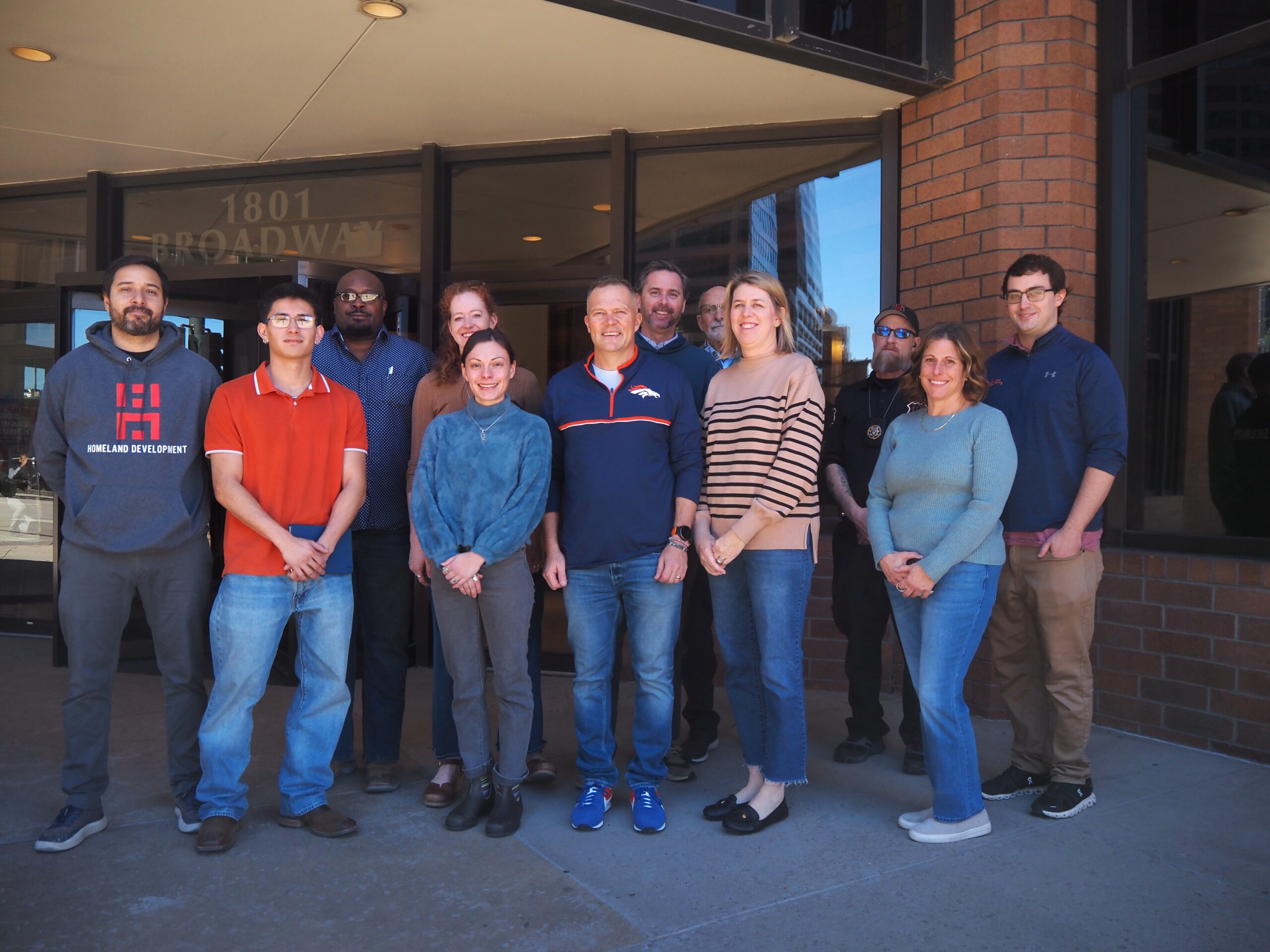
Clark stands outside Trinity Place with employees of Homeland, the real estate firm that manages his holdings. (Thomas Gounley/BusinessDen)
On Monday, Clark toured the building floor by floor with a dozen employees of Homeland, a real estate firm he founded, which has 35 employees. It manages his real estate portfolio, everything from leasing to property management to construction.
The largest tenant at Trinity Place right now, Clark said, is an oil and gas firm called Wavetech Energy. It has 6,100 square feet.
On the ground floor, there’s Savina’s Mexican Kitchen, formerly known as La Loma. Clark plans to bring in a second eatery, Friskie Fries, which operates in Rhode Island and sells fries topped with things like cheesesteak and General Tso’s chicken.
The road to filling the building, Clark said, involves taking advantage of the low price he paid.
“Quality and reasonable prices — we can offer that with our basis reset.”
Craig Clark, 48, stands in front of the Trinity Place office tower at 1801 Broadway in Denver on Jan. 5, 2026. (Thomas Gounley/BusinessDen)
Craig Clark believes the feel of downtown Denver is on an upswing.
“I think we passed the bottom for vibrancy in downtown,” he said.
And the Cherry Hills Village resident now owns a major asset on the upper end of it. On Dec. 30, a group of investors led by Clark paid $6 million for the distressed 17-story Trinity Place office tower at 1801 Broadway, records show.
That’s about $31 a square foot for the 195,000-square-foot structure. It’s an 85% drop from 2019, when a Chicago-based coworking firm Expansive bought the building for $40.2 million.
Clark bought the tower from LoanCore Capital, a lender that financed the 2019 acquisition and foreclosed on the property in November 2024. LoanCore tasked JLL with finding a buyer last year.
Clark’s bid was not initially selected.
“We ended up second place to a residential conversion,” he told BusinessDen Monday.
Given its smaller floorplates, about 12,000 square feet, Trinity Place had been considered a possible fit to be turned into apartments. But the original buyer planning to do that — a Seattle-based firm, sources tell BusinessDen — didn’t make it to the finish line on the purchase.
The Trinity Place building at 1801 Broadway is 17 stories. (BusinessDen file)
In September, Clark said he stepped back in. He financed the deal with a $4.5 million loan from Dynamo Capital.
On his tour of the building while it was listed, Clark said, he concluded that a residential conversion wasn’t feasible. In the event of medical emergencies, the freight elevator can’t fit a laid-down gurney, he said. While there are two sets of stairs, they share the same shaft. Each of those problems could require a new shaft, he said — potentially a $20 million cost.
So, Clark is keeping Trinity Place as an office building.
“We see it as a lease-up,” he said.
The building is 30% occupied, according to Clark. He said he thinks the lender made a mistake by assuming a residential conversion would be the best use and ceasing leasing efforts as a result.
Office buildings have been selling at deep discounts across the metro area for the past couple years. Downtown, the Denver Energy Center and 621 and 633 17th St. have sold for even less than Clark paid.
But he sees Trinity Place as a safer bet because the building isn’t in need of a huge amount of work.
“The condition is so good and it’s already modernized,” he said, noting that Expansive did a lot of work.
Clark said he started 2025 owning about 500,000 square feet of commercial real estate along the Front Range. He ended the year just shy of 1 million. Trinity Place is his largest asset, eclipsing the 110,000-square-foot office building at 327 Inverness Drive South in Douglas County that he bought in 2024.
But the 48-year-old isn’t your average real estate guy.
Signage for Trinity Place. (BusinessDen file)
A Colorado native and graduate of the University of Colorado School of Law, Clark served as a judge advocate general, or JAG, officer in the U.S. Marine Corps. He was released from active duty in 2007 and is still in the Marine Corps Reserves.
While Clark was in law school in the late 1990s, he and his father dabbled in e-commerce with a site called DealCat.com. It mostly sold electronics, but the profits didn’t match the workload, he said. Still, the experience helped later, after Clark stayed at a Marriott hotel and loved the pillows.
Marriott didn’t sell the pillows then, and when Clark bought them directly from the manufacturer, he had to buy more than 100. He sold the excess online. In 2004, he founded what became Pillows.com.
The Denver company now has 18 employees, and Clark has hired a CEO to run it. (The industry is more cutthroat than one might expect. Last year, Pillows.com sued a rival it said was ripping it off. That case is pending.)
Pillows.com needed warehouses, which is how Clark got into commercial real estate, although he dabbled in the residential side earlier. He bought a Winter Park condo at age 18 and rented it out, he said. While in the Marine Corps, he bought a house at each duty station and, when moved elsewhere, kept the place and rented it.
Clark stands outside Trinity Place with employees of Homeland, the real estate firm that manages his holdings. (Thomas Gounley/BusinessDen)
On Monday, Clark toured the building floor by floor with a dozen employees of Homeland, a real estate firm he founded, which has 35 employees. It manages his real estate portfolio, everything from leasing to property management to construction.
The largest tenant at Trinity Place right now, Clark said, is an oil and gas firm called Wavetech Energy. It has 6,100 square feet.
On the ground floor, there’s Savina’s Mexican Kitchen, formerly known as La Loma. Clark plans to bring in a second eatery, Friskie Fries, which operates in Rhode Island and sells fries topped with things like cheesesteak and General Tso’s chicken.
The road to filling the building, Clark said, involves taking advantage of the low price he paid.
“Quality and reasonable prices — we can offer that with our basis reset.”