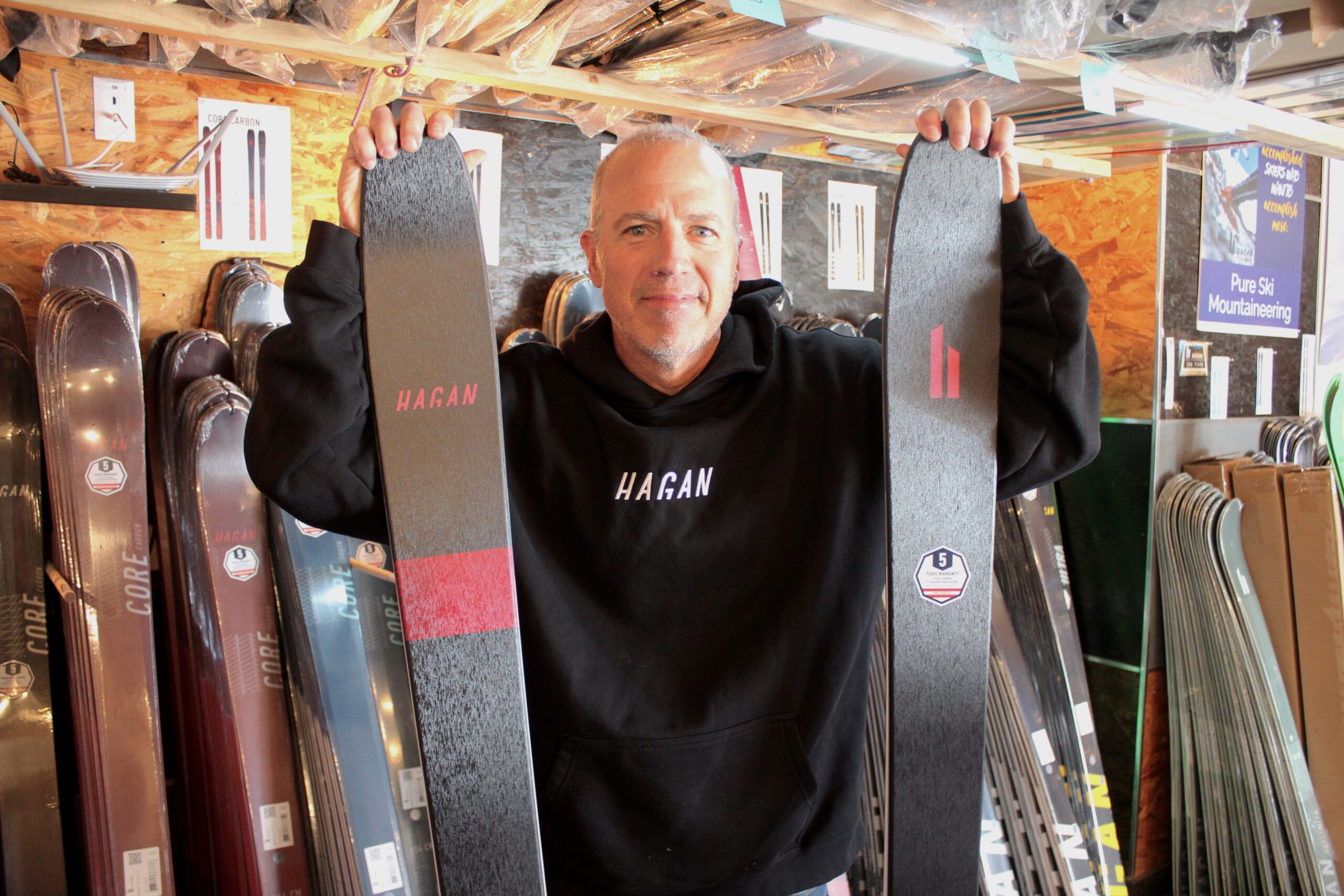
Mike Hogan bought Hagan from Mike Hagen in 2023. The Austrian Aki brand’s warehouse is in Louisville. (Max Scheinblum/BusinessDen)
While most of the ski world is trying to go downhill, Mike Hogan is thinking the opposite.
Hagan, the Austrian ski mountaineering brand he owns the North American distribution rights to, is aiming to capitalize on an ascending uphill ski culture. The business sells skis, bindings, boots and skins — sticky attachable strips that give twigs traction in the snow — made specifically for touring the backcountry.
“With the price of lift tickets, and the traffic on I-70 and the crowds and lines and just the difficulty it takes, the commitment that it takes to be a downhill skier today, it’s driving people to say, ‘Hey, you know, I can do this on my own,’” the longtime Coloradan said.
In a black diamond-grade tongue twister, Hogan bought Hagan’s distribution rights from Mike Hagen, a cycling and ski coach in Breckenridge, in the spring of 2023. This season will be Hogan’s third importing and slinging gear out of a warehouse in Louisville.
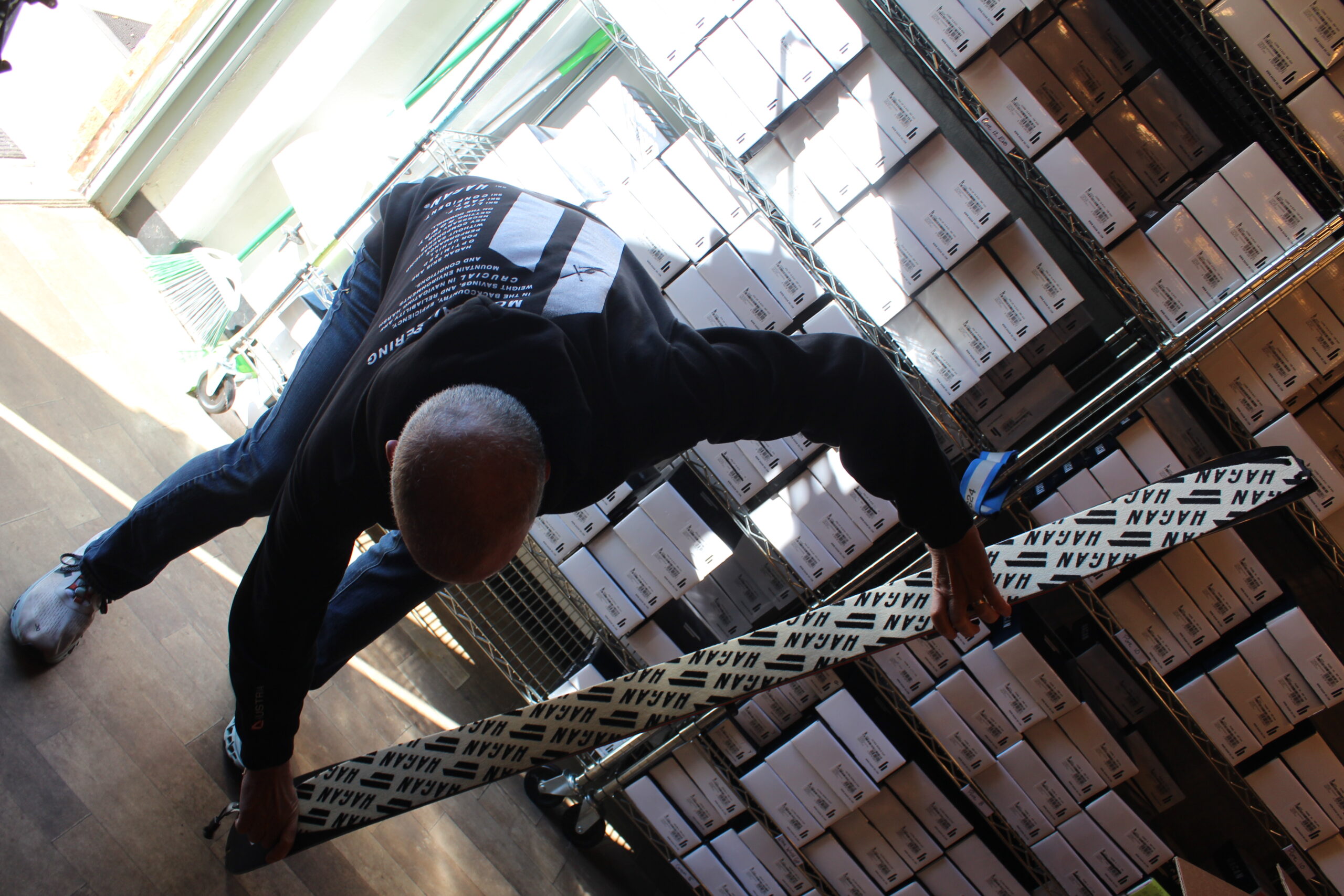
Mike Hogan putting skins – a sticky attachable strips that give twigs traction in the snow – on a Hagan ski. (Max Scheinblum/BusinessDen)
He declined to disclose revenue but said the business is profitable and his stateside business has been growing 17% on average each year and is up 12% year-over-year to date.
Hagan was founded in Austria in 1924. Hogan owned “quite a few pairs” of the company’s skis before looking for a deal to bring a foreign brand to America.
“(Hagan) seems to be ubiquitous in the Alps but not very much here in terms of retailer distribution,” he said.
When Hogan took the helm, he said 30% of Hagan’s North American business came from wholesaling to backcountry ski shops and the other 70% was from selling direct-to-consumer through its website. In the years since, that ratio has moved to a 40-60 split.
“That’s the number I’m working on to flip,” he said. “And we keep whittling it down.”
With a more choose-your-own-adventure way to get into the sport compared with traditional ski resorts, Hogan said he thinks getting in front of prospective touring skiers is the best way to get them to buy the product.
In 2023, Hagan was in 10 of the country’s 280 backcountry retailers. Now, it’s in 24. Hogan added six this year, and he hopes to add 10 or so each season in the future, he said. His best performing shop is in Jackson, N.H, where skiers earn their turns in the White Mountains.
“When you look at a map of Europe and you see where you can buy Hagan skis, it’s like a United States map of McDonald’s,” Hogan said. “You can literally buy skis on every street corner in the Alps.”
The brand’s skis go for between $500 and $1,000 a pair, bindings for $500 to $700, boots for $750 to $800 and skins in the $200 range. A substantial percentage of customers get a discount by buying them together.
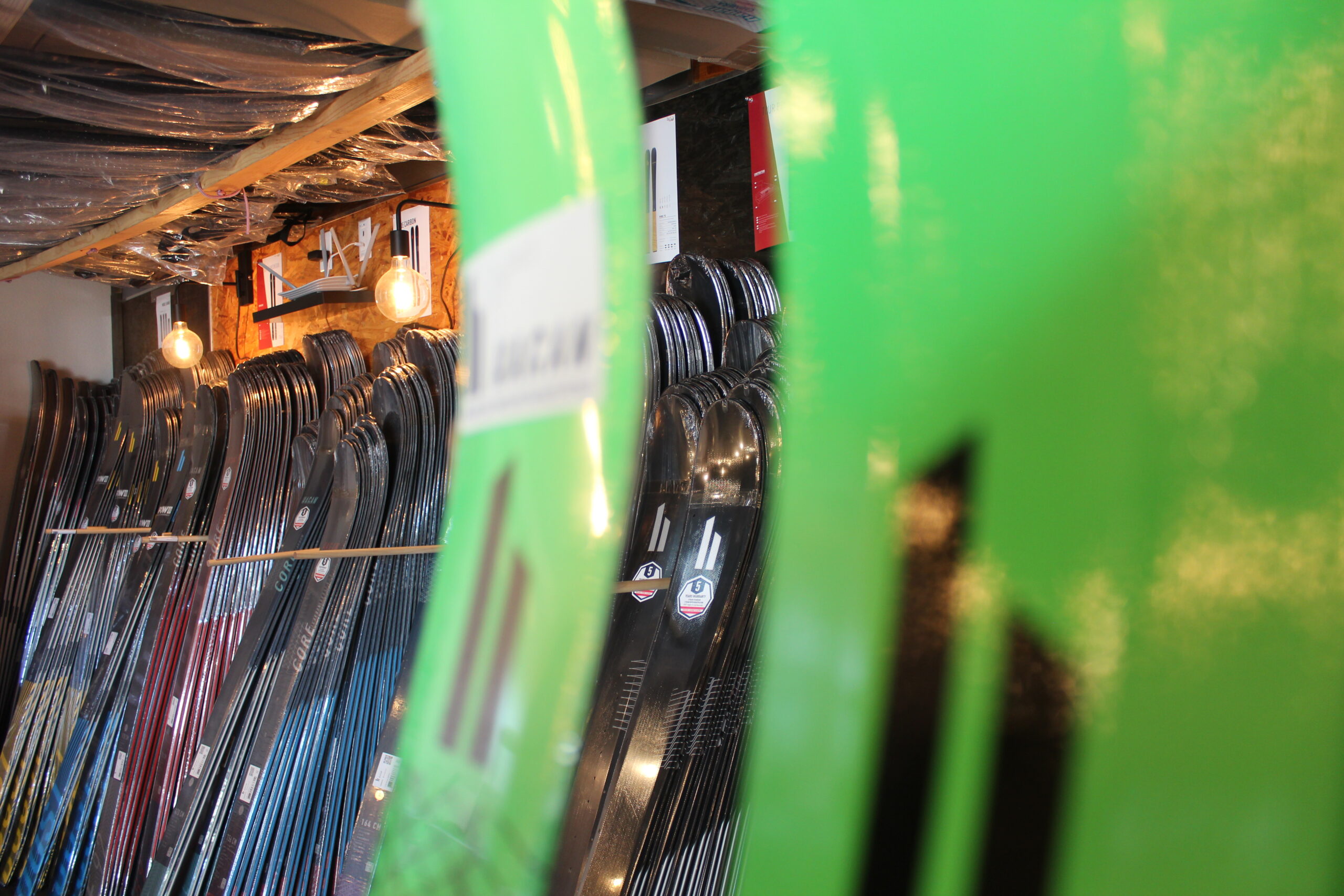
Hogan said Hagan’s skis are known for their light weight and being exclusively for touring. (Max Scheinblum/BusinessDen)
Because of a 15% blanket tariff and a weakening U.S. dollar, Hagan gear imported from Austria has become more expensive stateside. Hogan said he’s increased prices by 23% this year. On a recent order, he had to pay an extra $26,000 up-front just so he could get access to the product.
Sales have been slightly lower than expected so far this season, Hogan said, in part because of the price increases. He also said low snowfall in Colorado and the West has held it back too. He’s heard from some shops back East, where Vermont’s Jay Peak is at 100 inches of snow already, that business is going well.
“Web sessions are up, but consumer uncertainty is the biggest factor that’s holding things back from really going,” Hogan said. “And early season snow is key for setting up the year for ski sales.”
Before Hagan, Hogan was in sales for retail software companies and also handled corporate partnerships for Ragnar Relay Series, which holds races for runners across the U.S., United Kingdom and Germany. The Illinois native was a Nordic skier in college at St. Lawrence University in New York before spending his last two years of undergrad at the University of Colorado Boulder.
He’s particularly excited about ski mountaineering making its Olympic debut in Italy next year. He said he thinks the uphill race, which is a minutes-long slice of the backcountry experience, will propel the industry as a whole.
A similar thing happened to the snowboarding world after it made its first appearance in the 1998 Olympics, Hogan said.
“I’d love to see a 10% to 20% bump in that uphill fitness category,” he said. “But that’s both speculative and hopeful.”
Mike Hogan bought Hagan from Mike Hagen in 2023. The Austrian Aki brand’s warehouse is in Louisville. (Max Scheinblum/BusinessDen)
While most of the ski world is trying to go downhill, Mike Hogan is thinking the opposite.
Hagan, the Austrian ski mountaineering brand he owns the North American distribution rights to, is aiming to capitalize on an ascending uphill ski culture. The business sells skis, bindings, boots and skins — sticky attachable strips that give twigs traction in the snow — made specifically for touring the backcountry.
“With the price of lift tickets, and the traffic on I-70 and the crowds and lines and just the difficulty it takes, the commitment that it takes to be a downhill skier today, it’s driving people to say, ‘Hey, you know, I can do this on my own,’” the longtime Coloradan said.
In a black diamond-grade tongue twister, Hogan bought Hagan’s distribution rights from Mike Hagen, a cycling and ski coach in Breckenridge, in the spring of 2023. This season will be Hogan’s third importing and slinging gear out of a warehouse in Louisville.
Mike Hogan putting skins – a sticky attachable strips that give twigs traction in the snow – on a Hagan ski. (Max Scheinblum/BusinessDen)
He declined to disclose revenue but said the business is profitable and his stateside business has been growing 17% on average each year and is up 12% year-over-year to date.
Hagan was founded in Austria in 1924. Hogan owned “quite a few pairs” of the company’s skis before looking for a deal to bring a foreign brand to America.
“(Hagan) seems to be ubiquitous in the Alps but not very much here in terms of retailer distribution,” he said.
When Hogan took the helm, he said 30% of Hagan’s North American business came from wholesaling to backcountry ski shops and the other 70% was from selling direct-to-consumer through its website. In the years since, that ratio has moved to a 40-60 split.
“That’s the number I’m working on to flip,” he said. “And we keep whittling it down.”
With a more choose-your-own-adventure way to get into the sport compared with traditional ski resorts, Hogan said he thinks getting in front of prospective touring skiers is the best way to get them to buy the product.
In 2023, Hagan was in 10 of the country’s 280 backcountry retailers. Now, it’s in 24. Hogan added six this year, and he hopes to add 10 or so each season in the future, he said. His best performing shop is in Jackson, N.H, where skiers earn their turns in the White Mountains.
“When you look at a map of Europe and you see where you can buy Hagan skis, it’s like a United States map of McDonald’s,” Hogan said. “You can literally buy skis on every street corner in the Alps.”
The brand’s skis go for between $500 and $1,000 a pair, bindings for $500 to $700, boots for $750 to $800 and skins in the $200 range. A substantial percentage of customers get a discount by buying them together.
Hogan said Hagan’s skis are known for their light weight and being exclusively for touring. (Max Scheinblum/BusinessDen)
Because of a 15% blanket tariff and a weakening U.S. dollar, Hagan gear imported from Austria has become more expensive stateside. Hogan said he’s increased prices by 23% this year. On a recent order, he had to pay an extra $26,000 up-front just so he could get access to the product.
Sales have been slightly lower than expected so far this season, Hogan said, in part because of the price increases. He also said low snowfall in Colorado and the West has held it back too. He’s heard from some shops back East, where Vermont’s Jay Peak is at 100 inches of snow already, that business is going well.
“Web sessions are up, but consumer uncertainty is the biggest factor that’s holding things back from really going,” Hogan said. “And early season snow is key for setting up the year for ski sales.”
Before Hagan, Hogan was in sales for retail software companies and also handled corporate partnerships for Ragnar Relay Series, which holds races for runners across the U.S., United Kingdom and Germany. The Illinois native was a Nordic skier in college at St. Lawrence University in New York before spending his last two years of undergrad at the University of Colorado Boulder.
He’s particularly excited about ski mountaineering making its Olympic debut in Italy next year. He said he thinks the uphill race, which is a minutes-long slice of the backcountry experience, will propel the industry as a whole.
A similar thing happened to the snowboarding world after it made its first appearance in the 1998 Olympics, Hogan said.
“I’d love to see a 10% to 20% bump in that uphill fitness category,” he said. “But that’s both speculative and hopeful.”