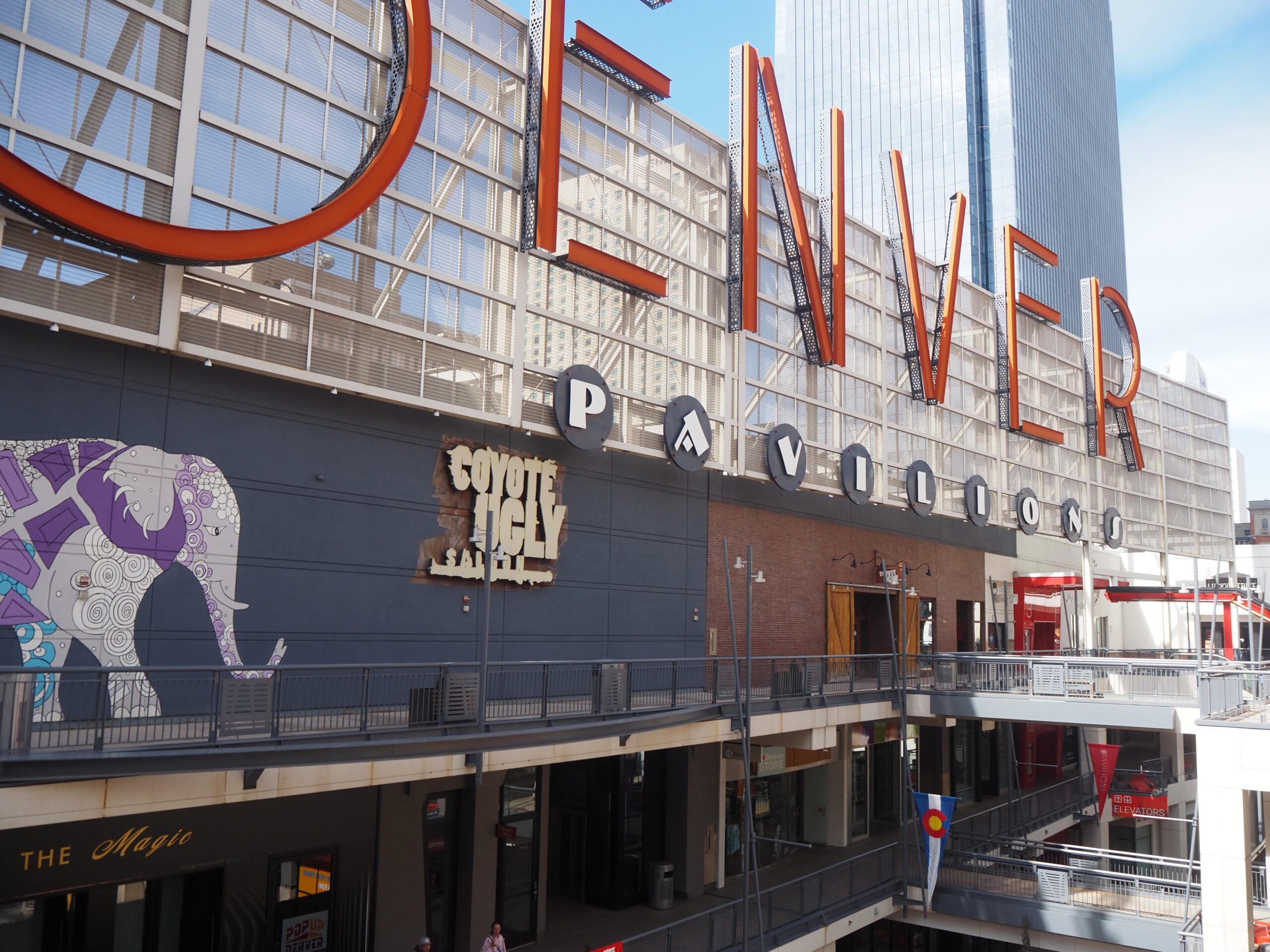
Denver Pavilions mall on March 10, 2025. (BusinessDen file)
While Denver’s Downtown Development Authority is exempt from paying property taxes, it will voluntarily pay an amount equal to the annual tax bill if it purchases the Denver Pavilions mall.
Bill Mosher, the city’s chief projects officer, said Wednesday that he included a reference to a planned “payment in lieu of taxes” in the pending purchase agreement for the 350,000-square-foot mall, which still needs to be approved by the City Council.
Eliminating the property’s tax bill would provide an unfair advantage to the mall’s tenants, Mosher said. At Pavilions, like at most commercial buildings, tenants are responsible for a share of their landlord’s building costs, including property taxes.
“I didn’t want some tenants on 16th Street to have an unfair advantage over other tenants on 16th Street,” Mosher said, referring to retailers and restaurants near but outside the mall.
Mosher is also CEO of the quasi-governmental entity that developed and owns the Hyatt Regency by the Colorado Convention Center. That hotel also makes a payment in lieu of taxes so that it doesn’t get an unfair advantage compared to other hotels, he said.
Earlier on Wednesday, citing a spokeswoman from the city’s finance department, BusinessDen reported that the the city and Denver Public Schools — the latter receives about two-thirds of property tax collections — would collect no property taxes following the DDA’s purchase of the Pavilions and two parking lots behind it due to the DDA being a tax-exempt entity.
That remains true for the parking lots, which flank Glenarm Place along 15th Street. Mosher said there’s no plan to do a payment in lieu of taxes there because he doesn’t see it creating an unfair advantage.
But the planned payment in lieu of taxes means Denver and its school system will still get revenue from Pavilions.
The DDA has agreed to pay $37 million for the Pavilions, which is owned by Denver-based Gart Properties, and $23 million for the parking lots, which are owned by New York-based Brookfield Properties.
This year, the Pavilions had a property tax bill of nearly $1.7 million, not counting an additional $95,000 that city records describe as “liens/fees.”
And Denver levied property taxes of about $475,000 against Brookfield for the two parking lots, records show.
Property tax bills depend in part on what a county assessor determines a property is worth. The assessor for Denver, which is both a city and a county, currently values the parcels that make up the Pavilions at a combined $59 million, records show — far more than the DDA’s purchase price. The parking lots behind the mall are valued at just shy of $18 million, some $5 million less than what the DDA has agreed to pay.
Gart Properties appealed the Pavilions valuation, Mosher said.
Mosher previously said that the DDA has opted to buy the Pavilions rather than see it go back to a lender due to Gart defaulting on an $85 million loan.
Correction: This story has been updated to reflect information about the planned payment in lieu of taxes.
Denver Pavilions mall on March 10, 2025. (BusinessDen file)
While Denver’s Downtown Development Authority is exempt from paying property taxes, it will voluntarily pay an amount equal to the annual tax bill if it purchases the Denver Pavilions mall.
Bill Mosher, the city’s chief projects officer, said Wednesday that he included a reference to a planned “payment in lieu of taxes” in the pending purchase agreement for the 350,000-square-foot mall, which still needs to be approved by the City Council.
Eliminating the property’s tax bill would provide an unfair advantage to the mall’s tenants, Mosher said. At Pavilions, like at most commercial buildings, tenants are responsible for a share of their landlord’s building costs, including property taxes.
“I didn’t want some tenants on 16th Street to have an unfair advantage over other tenants on 16th Street,” Mosher said, referring to retailers and restaurants near but outside the mall.
Mosher is also CEO of the quasi-governmental entity that developed and owns the Hyatt Regency by the Colorado Convention Center. That hotel also makes a payment in lieu of taxes so that it doesn’t get an unfair advantage compared to other hotels, he said.
Earlier on Wednesday, citing a spokeswoman from the city’s finance department, BusinessDen reported that the the city and Denver Public Schools — the latter receives about two-thirds of property tax collections — would collect no property taxes following the DDA’s purchase of the Pavilions and two parking lots behind it due to the DDA being a tax-exempt entity.
That remains true for the parking lots, which flank Glenarm Place along 15th Street. Mosher said there’s no plan to do a payment in lieu of taxes there because he doesn’t see it creating an unfair advantage.
But the planned payment in lieu of taxes means Denver and its school system will still get revenue from Pavilions.
The DDA has agreed to pay $37 million for the Pavilions, which is owned by Denver-based Gart Properties, and $23 million for the parking lots, which are owned by New York-based Brookfield Properties.
This year, the Pavilions had a property tax bill of nearly $1.7 million, not counting an additional $95,000 that city records describe as “liens/fees.”
And Denver levied property taxes of about $475,000 against Brookfield for the two parking lots, records show.
Property tax bills depend in part on what a county assessor determines a property is worth. The assessor for Denver, which is both a city and a county, currently values the parcels that make up the Pavilions at a combined $59 million, records show — far more than the DDA’s purchase price. The parking lots behind the mall are valued at just shy of $18 million, some $5 million less than what the DDA has agreed to pay.
Gart Properties appealed the Pavilions valuation, Mosher said.
Mosher previously said that the DDA has opted to buy the Pavilions rather than see it go back to a lender due to Gart defaulting on an $85 million loan.
Correction: This story has been updated to reflect information about the planned payment in lieu of taxes.