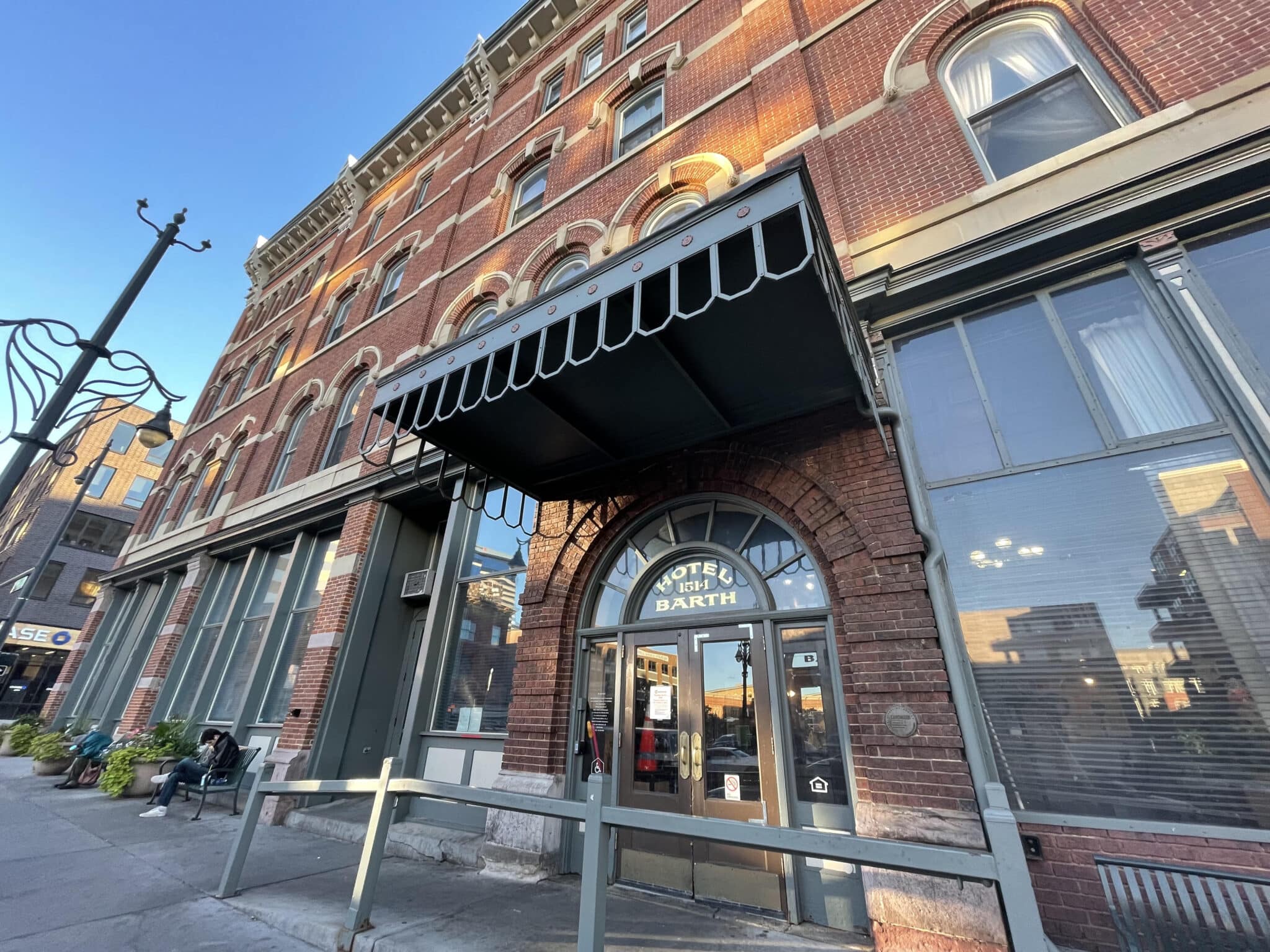
The Barth Hotel building at 1514 17th St. in Denver dates to the 1880s. (BusinessDen file)
Walter Isenberg wants to bring nightly stays back to the Barth Hotel.
The building at the corner of 17th and Blake streets in downtown Denver was erected in the 1880s and operated as a hotel for nearly a century. It was converted to housing around 1980, but now sits vacant. Residents moved out last year because of its poor condition.
Isenberg, the CEO of Sage Hospitality, is under contract to buy the Barth. But to actually turn it back into a hotel, he needs to do more than just renovations.
He needs to persuade Denver to do something it’s never done before.
Covenants that the city put on the building mean it can be used only as income-restricted housing for seniors. Isenberg wants Denver to move those required units to another property.
“The city needs to be open-minded,” he told BusinessDen.
Isenberg’s request, however, has alarmed some Denver City Council members.
“How do we insert ourselves to make sure that we’re keeping those covenants?” Councilwoman Amanda Sandoval asked in a public meeting earlier this month. “Because the Barth Hotel has provided housing to seniors in that neighborhood for as long as I’ve been alive.
“It’s weighing heavily on my mind,” she added.
A listing for sale, and a housing-minded buyer
The Barth Hotel is owned by Senior Housing Options, a Denver-based nonprofit.
For years, residents of the building just two blocks from Union Station could often be seen sitting on benches outside it.
But the building is in rough shape. Denver lent SHO $200,000 for it in 2003, records show, and an additional $162,000 in 2020 when a boiler went out. In connection with that, a new 60-year covenant was put on the property, meaning it had to remain as affordable housing until 2080.
Last October, according to Adam Lyons, an official with Denver’s Department of Housing Stability, the city informed SHO it was “temporarily out of compliance” on those loans. The city cited the Barth’s condition, particularly an elevator in need of repair.
Rather than fix the place, SHO vacated it. Residents moved out by this past January. And this spring, SHO put the building up for sale, asking $2.5 million. The nonprofit’s broker estimated that between $10 million and $12 million in work is needed.
“It’s really a gorgeous asset,” Dorit Fischer of NAI Shames Makovsky said at the time. “You look at the exterior of this building, it’s really wonderful. It needs a lot of love inside, to be honest, but it will be great to see it in its next life.”
Sue Powers, the head of Denver development firm Urban Ventures, saw the listing and reached out to Eaton Senior Communities. She’d been hoping to do a project with the Lakewood-based firm.
Eaton determined it could buy the Barth for $2.5 million and fix it up, fashioning 50 units from it with the help of funds from the city housing department, the Downtown Development Authority and both historic and low-income housing tax credits. Powers was to be the development consultant.
“This would’ve been a $22 million project,” said Eaton CEO Diana Delgado.
Eaton went under contract to buy the property June 5, according to Powers, and started applying for the financing programs.
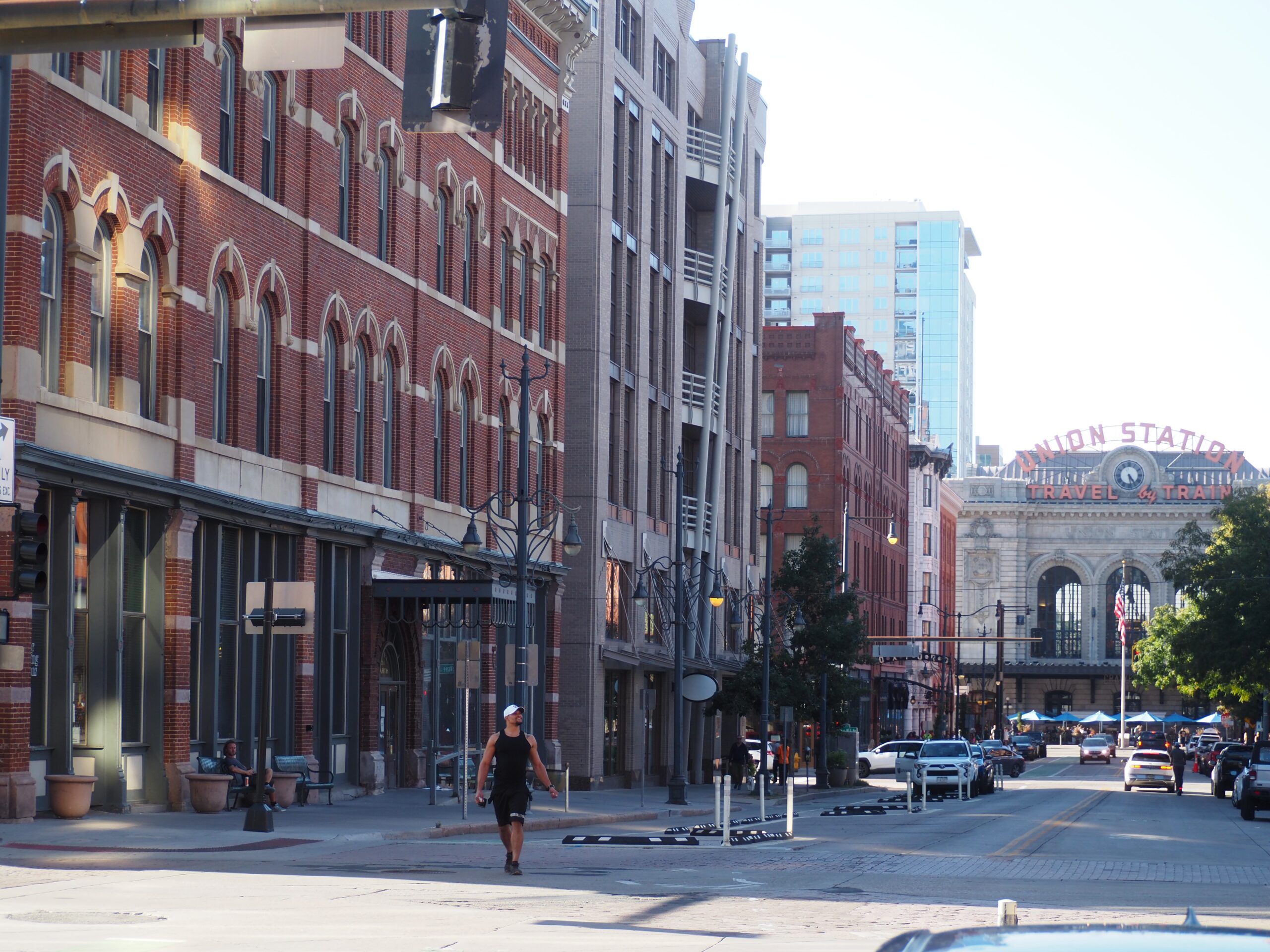
The red-brick Barth, seen on Sept. 18, is two blocks from Union Station. (Thomas Gounley/BusinessDen)
A right of first refusal, and a letter to Denver
When Senior Housing Options bought the property decades ago, it gave seller Ralph Riggs a right of first refusal. If SHO opted to sell the building down the road, it would give Riggs the option to match the offer and buy the building back.
Riggs assigned the right of first refusal to one entity, which was succeeded by Oxford 2005 LLLP, a different entity that Isenberg leads as general partner.
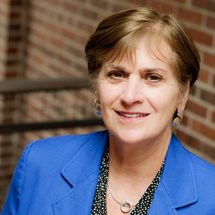
Sue Powers
Powers said she and Eaton were aware of the right of first refusal but didn’t expect anything to come of it.
“We don’t think he’s going to exercise it because there’s a covenant and it’s affordable, and it’s not what he does for a living,” she said of Isenberg.
But Isenberg was interested in the Barth.
On June 19, an attorney representing Oxford 2005 sent a letter to city leaders saying that Isenberg’s entity “desires to purchase The Barth on the condition that the City releases the Covenants or moves the Covenants to another location within the City more conducive to low-income housing.”
News of the letter spread and prompted concerns.
“Those are incredibly valuable to us, so I fundamentally was very concerned about losing covenant-restricted units,” Councilwoman Sarah Parady told BusinessDen. “And especially the Barth in particular.”
In late June, Isenberg’s entity gave notice it would exercise the right of first refusal. Eaton’s contract for the Barth was terminated in July.
In a meeting earlier this month, council members pressed city staff on the letter, without disclosing who sent it. They were told, essentially, there wasn’t even a way to do what Isenberg was asking.
“There is not a process, or a way to remove a covenant or transfer a covenant,” said Jamie Rife, executive director of the Department of Housing Stability. “And I’ve spoken additionally to national partners, to see if this is a precedent that other cities set, and no one is aware of this being done in Denver nor nationally.”
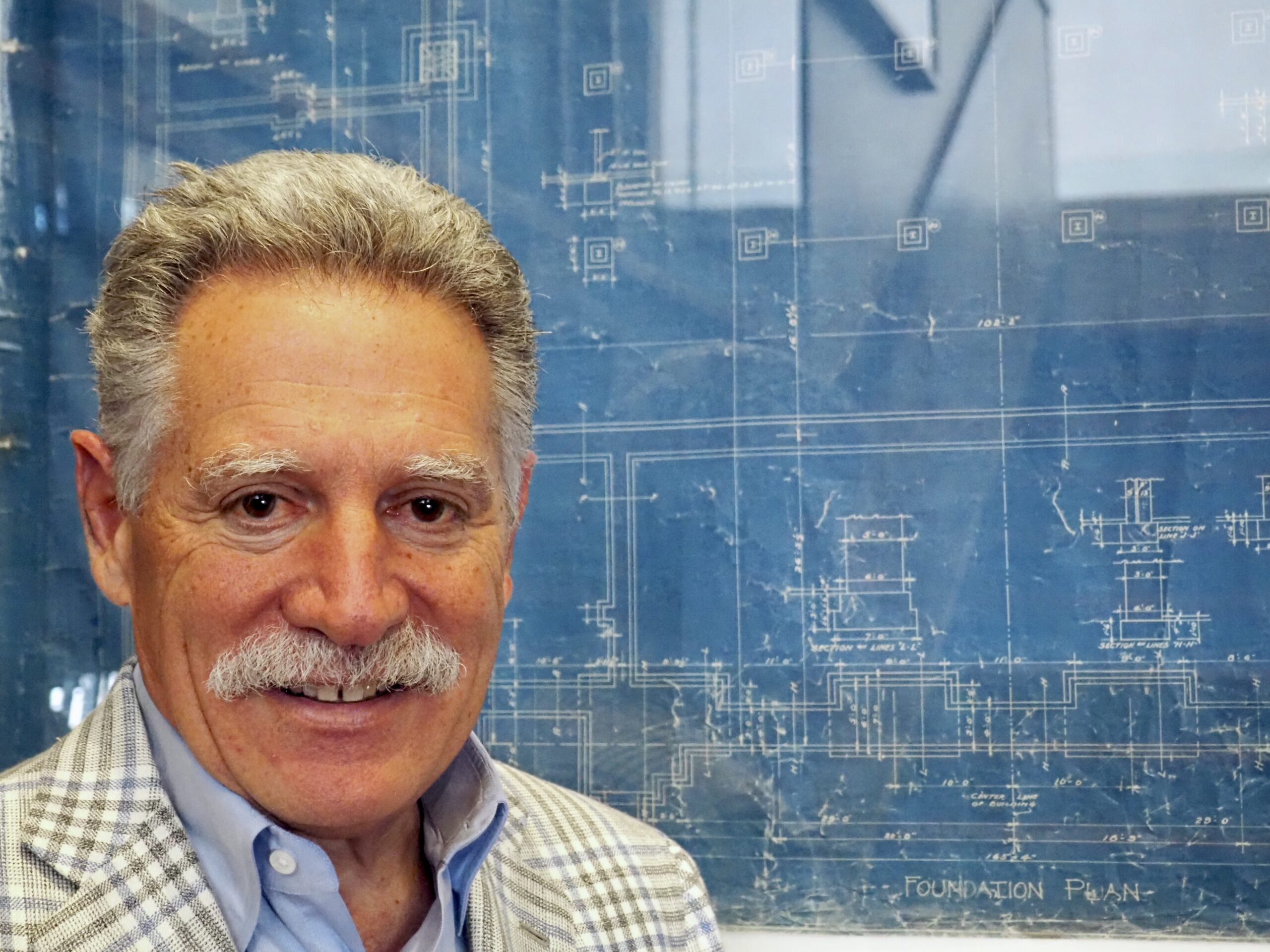
Walter Isenberg stands in front of the original Union Station blueprints featured in the Crawford Hotel in 2024. (BusinessDen file)
Isenberg: ‘People change policies all the time’
“Well, so what?”
That’s Isenberg’s reaction to hearing that moving a covenant has never been done.
“It’s not even a law. It’s a policy. People change policies all the time,” he told BusinessDen.
Isenberg said he believes the city should negotiate with him.
“We’re willing to sit down, roll up our sleeves and create this win-win situation,” he said.
Denver has a budget crisis, Isenberg noted. Last month, 171 city employees were laid off, and 665 open positions were eliminated. Why not let him turn the Barth into a beautiful 40-room hotel that will generate sales tax, lodger tax and property tax?
Isenberg is already downtown’s most prominent hotelier. His firm is responsible for The Crawford within Union Station, The Rally in McGregor Square and The Maven in Dairy Block, among others.
There’s no guarantee that Eaton would get all the tax credits and public dollars it needed for its project, Isenberg said.
“We do not need DDA money. We’re not reliant on low-income tax credits. And we can pay more,” he said.
In exercising the right of first refusal, Isenberg just needed to agree to match Eaton’s $2.5 million offer. But he said he’s willing to pay “materially more” if the covenant is moved.
That would benefit the seller, Senior Housing Options, which operates affordable housing elsewhere in the region. Isenberg said SHO, which did not respond to requests for comment, has “serious financial challenges.” SHO had net income of $1.8 million in 2023, the most recent year its tax filings are publicly available, and lost $223,000 in 2022.
Moving the covenants would mean no loss of income-restricted units. Isenberg doesn’t have a specific property lined up to take them but said he has talked to multiple developers and thinks the units could potentially just move within downtown.
He mentioned the Symes building at 820 16th St. as a possibility. The office building’s owners want to convert it to 116 apartments, most of which would be leased at market rate. The project is slated to get a $17 million loan from the Downtown Development Authority.
Isenberg said keeping the Barth as housing for seniors is “just not the highest and best use of the property.” He emphasized its poor condition.
“This building is worth less than zero as low-income housing,” he said.
Isenberg: Denver ‘took advantage’ of Barth owner
Parady, the councilwoman, said she doesn’t want to see covenants moved “around like Legos.” She’s also wary of creating “certain neighborhoods only for the wealthy.”

Sarah Parady
“Part of the benefit of a covenant is the stability and the long-term planning that goes with that,” she said last week.
Parady said she was glad to hear reassurance from city staff that the covenants will be enforced and that there’s no process to move them. But she’s still unsure what happens next with the Barth.
“What we will have to eventually do to defend this covenant is not yet clear to me,” she said.
In her June 19 letter, Oxford 2005’s attorney at Spencer Fane wrote that the covenants should not have been placed on the property without the entity’s consent, due to the right of first refusal. If the city doesn’t work with Oxford 2005, Wendy Harring wrote, it “intends to pursue all legal remedies available … to preserve the priority and value of the ROFR.”
Speaking this month, Isenberg indicated that litigation remained a possibility. He highlighted the fact that the loans SHO received in exchange for the covenants were relatively small.
“The city took advantage of Senior Housing Options because Senior Housing Options got no real consideration for effectively devaluing the property to zero,” he said.
Powers, meanwhile, questions the legitimacy of Oxford 2005’s right of first refusal. She thinks Riggs, the Barth’s previous owner, could assign the right of first refusal only to an entity he was a member of. And Riggs is not a member of Oxford 2005.
Isenberg said nothing in the documents requires Riggs to be involved. And SHO itself determined that the entity has a legitimate right of first refusal, he said.
Isenberg said the city did not formally respond to the June 19 letter. Mayor Mike Johnston’s office didn’t respond last week when asked if Denver is willing to negotiate.
Powers said she’s concerned about the precedent that negotiating with Isenberg would set and about the prospect of making downtown less diverse.
“I’m not having the angst about this because of my fees,” she said, referencing what she would have been paid by Eaton. “I’m at a point in my career where I can choose the work I do, and I think this is so important for downtown.”
Isenberg said that bringing hotel rooms back to the Barth is “the right thing to do for the neighborhood” — and that he thinks it will happen.
“I’m very optimistic that we will be successful,” he said.
The Barth Hotel building at 1514 17th St. in Denver dates to the 1880s. (BusinessDen file)
Walter Isenberg wants to bring nightly stays back to the Barth Hotel.
The building at the corner of 17th and Blake streets in downtown Denver was erected in the 1880s and operated as a hotel for nearly a century. It was converted to housing around 1980, but now sits vacant. Residents moved out last year because of its poor condition.
Isenberg, the CEO of Sage Hospitality, is under contract to buy the Barth. But to actually turn it back into a hotel, he needs to do more than just renovations.
He needs to persuade Denver to do something it’s never done before.
Covenants that the city put on the building mean it can be used only as income-restricted housing for seniors. Isenberg wants Denver to move those required units to another property.
“The city needs to be open-minded,” he told BusinessDen.
Isenberg’s request, however, has alarmed some Denver City Council members.
“How do we insert ourselves to make sure that we’re keeping those covenants?” Councilwoman Amanda Sandoval asked in a public meeting earlier this month. “Because the Barth Hotel has provided housing to seniors in that neighborhood for as long as I’ve been alive.
“It’s weighing heavily on my mind,” she added.
A listing for sale, and a housing-minded buyer
The Barth Hotel is owned by Senior Housing Options, a Denver-based nonprofit.
For years, residents of the building just two blocks from Union Station could often be seen sitting on benches outside it.
But the building is in rough shape. Denver lent SHO $200,000 for it in 2003, records show, and an additional $162,000 in 2020 when a boiler went out. In connection with that, a new 60-year covenant was put on the property, meaning it had to remain as affordable housing until 2080.
Last October, according to Adam Lyons, an official with Denver’s Department of Housing Stability, the city informed SHO it was “temporarily out of compliance” on those loans. The city cited the Barth’s condition, particularly an elevator in need of repair.
Rather than fix the place, SHO vacated it. Residents moved out by this past January. And this spring, SHO put the building up for sale, asking $2.5 million. The nonprofit’s broker estimated that between $10 million and $12 million in work is needed.
“It’s really a gorgeous asset,” Dorit Fischer of NAI Shames Makovsky said at the time. “You look at the exterior of this building, it’s really wonderful. It needs a lot of love inside, to be honest, but it will be great to see it in its next life.”
Sue Powers, the head of Denver development firm Urban Ventures, saw the listing and reached out to Eaton Senior Communities. She’d been hoping to do a project with the Lakewood-based firm.
Eaton determined it could buy the Barth for $2.5 million and fix it up, fashioning 50 units from it with the help of funds from the city housing department, the Downtown Development Authority and both historic and low-income housing tax credits. Powers was to be the development consultant.
“This would’ve been a $22 million project,” said Eaton CEO Diana Delgado.
Eaton went under contract to buy the property June 5, according to Powers, and started applying for the financing programs.
The red-brick Barth, seen on Sept. 18, is two blocks from Union Station. (Thomas Gounley/BusinessDen)
A right of first refusal, and a letter to Denver
When Senior Housing Options bought the property decades ago, it gave seller Ralph Riggs a right of first refusal. If SHO opted to sell the building down the road, it would give Riggs the option to match the offer and buy the building back.
Riggs assigned the right of first refusal to one entity, which was succeeded by Oxford 2005 LLLP, a different entity that Isenberg leads as general partner.
Sue Powers
Powers said she and Eaton were aware of the right of first refusal but didn’t expect anything to come of it.
“We don’t think he’s going to exercise it because there’s a covenant and it’s affordable, and it’s not what he does for a living,” she said of Isenberg.
But Isenberg was interested in the Barth.
On June 19, an attorney representing Oxford 2005 sent a letter to city leaders saying that Isenberg’s entity “desires to purchase The Barth on the condition that the City releases the Covenants or moves the Covenants to another location within the City more conducive to low-income housing.”
News of the letter spread and prompted concerns.
“Those are incredibly valuable to us, so I fundamentally was very concerned about losing covenant-restricted units,” Councilwoman Sarah Parady told BusinessDen. “And especially the Barth in particular.”
In late June, Isenberg’s entity gave notice it would exercise the right of first refusal. Eaton’s contract for the Barth was terminated in July.
In a meeting earlier this month, council members pressed city staff on the letter, without disclosing who sent it. They were told, essentially, there wasn’t even a way to do what Isenberg was asking.
“There is not a process, or a way to remove a covenant or transfer a covenant,” said Jamie Rife, executive director of the Department of Housing Stability. “And I’ve spoken additionally to national partners, to see if this is a precedent that other cities set, and no one is aware of this being done in Denver nor nationally.”
Walter Isenberg stands in front of the original Union Station blueprints featured in the Crawford Hotel in 2024. (BusinessDen file)
Isenberg: ‘People change policies all the time’
“Well, so what?”
That’s Isenberg’s reaction to hearing that moving a covenant has never been done.
“It’s not even a law. It’s a policy. People change policies all the time,” he told BusinessDen.
Isenberg said he believes the city should negotiate with him.
“We’re willing to sit down, roll up our sleeves and create this win-win situation,” he said.
Denver has a budget crisis, Isenberg noted. Last month, 171 city employees were laid off, and 665 open positions were eliminated. Why not let him turn the Barth into a beautiful 40-room hotel that will generate sales tax, lodger tax and property tax?
Isenberg is already downtown’s most prominent hotelier. His firm is responsible for The Crawford within Union Station, The Rally in McGregor Square and The Maven in Dairy Block, among others.
There’s no guarantee that Eaton would get all the tax credits and public dollars it needed for its project, Isenberg said.
“We do not need DDA money. We’re not reliant on low-income tax credits. And we can pay more,” he said.
In exercising the right of first refusal, Isenberg just needed to agree to match Eaton’s $2.5 million offer. But he said he’s willing to pay “materially more” if the covenant is moved.
That would benefit the seller, Senior Housing Options, which operates affordable housing elsewhere in the region. Isenberg said SHO, which did not respond to requests for comment, has “serious financial challenges.” SHO had net income of $1.8 million in 2023, the most recent year its tax filings are publicly available, and lost $223,000 in 2022.
Moving the covenants would mean no loss of income-restricted units. Isenberg doesn’t have a specific property lined up to take them but said he has talked to multiple developers and thinks the units could potentially just move within downtown.
He mentioned the Symes building at 820 16th St. as a possibility. The office building’s owners want to convert it to 116 apartments, most of which would be leased at market rate. The project is slated to get a $17 million loan from the Downtown Development Authority.
Isenberg said keeping the Barth as housing for seniors is “just not the highest and best use of the property.” He emphasized its poor condition.
“This building is worth less than zero as low-income housing,” he said.
Isenberg: Denver ‘took advantage’ of Barth owner
Parady, the councilwoman, said she doesn’t want to see covenants moved “around like Legos.” She’s also wary of creating “certain neighborhoods only for the wealthy.”
Sarah Parady
“Part of the benefit of a covenant is the stability and the long-term planning that goes with that,” she said last week.
Parady said she was glad to hear reassurance from city staff that the covenants will be enforced and that there’s no process to move them. But she’s still unsure what happens next with the Barth.
“What we will have to eventually do to defend this covenant is not yet clear to me,” she said.
In her June 19 letter, Oxford 2005’s attorney at Spencer Fane wrote that the covenants should not have been placed on the property without the entity’s consent, due to the right of first refusal. If the city doesn’t work with Oxford 2005, Wendy Harring wrote, it “intends to pursue all legal remedies available … to preserve the priority and value of the ROFR.”
Speaking this month, Isenberg indicated that litigation remained a possibility. He highlighted the fact that the loans SHO received in exchange for the covenants were relatively small.
“The city took advantage of Senior Housing Options because Senior Housing Options got no real consideration for effectively devaluing the property to zero,” he said.
Powers, meanwhile, questions the legitimacy of Oxford 2005’s right of first refusal. She thinks Riggs, the Barth’s previous owner, could assign the right of first refusal only to an entity he was a member of. And Riggs is not a member of Oxford 2005.
Isenberg said nothing in the documents requires Riggs to be involved. And SHO itself determined that the entity has a legitimate right of first refusal, he said.
Isenberg said the city did not formally respond to the June 19 letter. Mayor Mike Johnston’s office didn’t respond last week when asked if Denver is willing to negotiate.
Powers said she’s concerned about the precedent that negotiating with Isenberg would set and about the prospect of making downtown less diverse.
“I’m not having the angst about this because of my fees,” she said, referencing what she would have been paid by Eaton. “I’m at a point in my career where I can choose the work I do, and I think this is so important for downtown.”
Isenberg said that bringing hotel rooms back to the Barth is “the right thing to do for the neighborhood” — and that he thinks it will happen.
“I’m very optimistic that we will be successful,” he said.