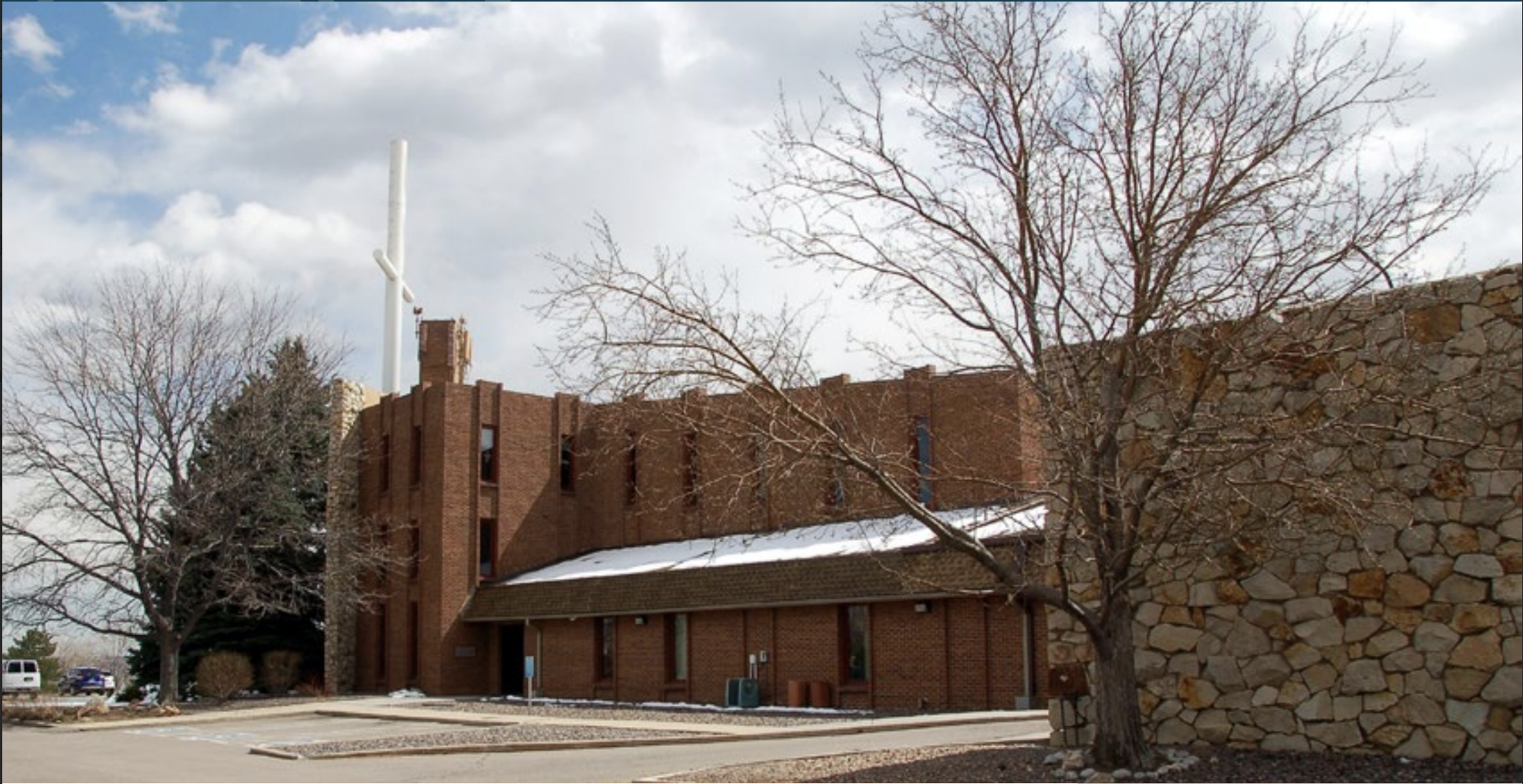
The church at 9700 W. Coal Mine Ave. sits in unincorporated Jefferson County. (Courtesy Tom Mathews)
Tom Mathews listed a church in the southwest part of the Denver metro area for sale in January 2018. Seven years later, it finally sold last week for $4.9 million.
“It was the most challenging deal of my career,” said Mathews, who works at Pinnacle Real Estate Advisors.
Dream Finders Homes, a Jacksonville, Florida-based homebuilder, was the buyer in the transaction, spending about $10.50 a square foot for 11 acres at 9700 W. Coal Mine Ave.
The firm will knock down the 28,500-square-foot church building on it and build 103 houses on the site, which is in unincorporated Jefferson County off Kipling Parkway, just east of Meadows Golf Club.
While the plan is straightforward, the path to this point was not. Mathews had four different potential buyers go under contract.
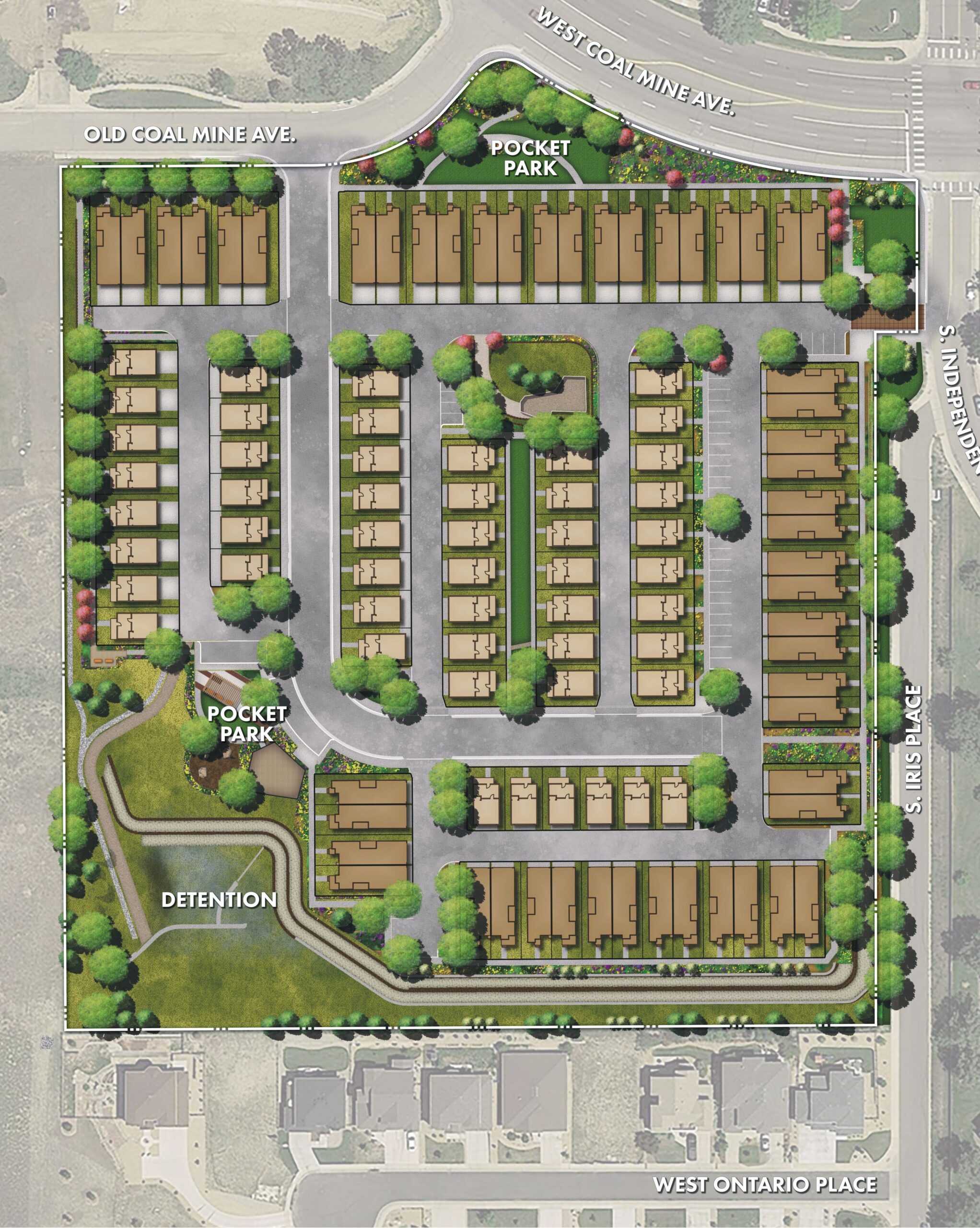
A site plan for the new neighborhood, which will be called Westend Ridge. (Courtesy Matt Childers of Dream Finders Homes)
The Columbine Hills Church of the Nazarene owned the property when it was first listed at the start of 2018, hoping to sell it and downsize. Mathews quickly secured a buyer looking to build senior housing. But that contract was nixed after nine months, he said.
Next up to the plate was Richmond American Homes, the national homebuilder headquartered in Denver. It rezoned the property for residential use while under contract, public records show.
Then, in 2020, the church went under and Colorado leadership for the Protestant denomination took the property over, Mathews said. The following year, Richmond American turned the contract over to a third buyer, a local group of developers acting under the entity Coal Mine Investors.
That group entitled the property for future development and renegotiated the leases for two cell towers on the lot before assigning its contract to the eventual buyer Dream Finders Homes, which paid $800,000 below the post-rezoning asking price of $5.7 million.
“We had to grant some concessions because the development and entitlement process was so involved,” Mathews said.
With the property in hand, entitled and rezoned, Dream Finders Homes is working through the final hurdles to start building. It started asbestos abatement on the church building last month, and will demolish it by the end of August, Mathews said. A cell tower hidden in the church’s steeple will remain and be replaced by a clocktower.
Dream Finder will spend the rest of this year and better part of 2026 putting in utilities and infrastructure, with hopes to start selling the homes by early 2027. The 51 single family homes and 52 duplexes will list from the $500,000s to the $700,000s.
“This is essentially the only development site within a few miles of here … It gives us a captive market,” said Matt Childers, regional vice president of land operations for Dream Finders Homes.
Childers is very familiar with the property. He worked for Richmond American when it was under contract to buy the site, and helped the firm rezone the lot. The houses his company plans to build will have rooftop patios to compensate for limited yard space on the dense site.
“This is what we would consider an infill site,” he said.
The church at 9700 W. Coal Mine Ave. sits in unincorporated Jefferson County. (Courtesy Tom Mathews)
Tom Mathews listed a church in the southwest part of the Denver metro area for sale in January 2018. Seven years later, it finally sold last week for $4.9 million.
“It was the most challenging deal of my career,” said Mathews, who works at Pinnacle Real Estate Advisors.
Dream Finders Homes, a Jacksonville, Florida-based homebuilder, was the buyer in the transaction, spending about $10.50 a square foot for 11 acres at 9700 W. Coal Mine Ave.
The firm will knock down the 28,500-square-foot church building on it and build 103 houses on the site, which is in unincorporated Jefferson County off Kipling Parkway, just east of Meadows Golf Club.
While the plan is straightforward, the path to this point was not. Mathews had four different potential buyers go under contract.
A site plan for the new neighborhood, which will be called Westend Ridge. (Courtesy Matt Childers of Dream Finders Homes)
The Columbine Hills Church of the Nazarene owned the property when it was first listed at the start of 2018, hoping to sell it and downsize. Mathews quickly secured a buyer looking to build senior housing. But that contract was nixed after nine months, he said.
Next up to the plate was Richmond American Homes, the national homebuilder headquartered in Denver. It rezoned the property for residential use while under contract, public records show.
Then, in 2020, the church went under and Colorado leadership for the Protestant denomination took the property over, Mathews said. The following year, Richmond American turned the contract over to a third buyer, a local group of developers acting under the entity Coal Mine Investors.
That group entitled the property for future development and renegotiated the leases for two cell towers on the lot before assigning its contract to the eventual buyer Dream Finders Homes, which paid $800,000 below the post-rezoning asking price of $5.7 million.
“We had to grant some concessions because the development and entitlement process was so involved,” Mathews said.
With the property in hand, entitled and rezoned, Dream Finders Homes is working through the final hurdles to start building. It started asbestos abatement on the church building last month, and will demolish it by the end of August, Mathews said. A cell tower hidden in the church’s steeple will remain and be replaced by a clocktower.
Dream Finder will spend the rest of this year and better part of 2026 putting in utilities and infrastructure, with hopes to start selling the homes by early 2027. The 51 single family homes and 52 duplexes will list from the $500,000s to the $700,000s.
“This is essentially the only development site within a few miles of here … It gives us a captive market,” said Matt Childers, regional vice president of land operations for Dream Finders Homes.
Childers is very familiar with the property. He worked for Richmond American when it was under contract to buy the site, and helped the firm rezone the lot. The houses his company plans to build will have rooftop patios to compensate for limited yard space on the dense site.
“This is what we would consider an infill site,” he said.